Showing posts with label plants. Show all posts
Wednesday, 12 August 2020
Natural dye and cooking from Kihada (Amur cork) tree

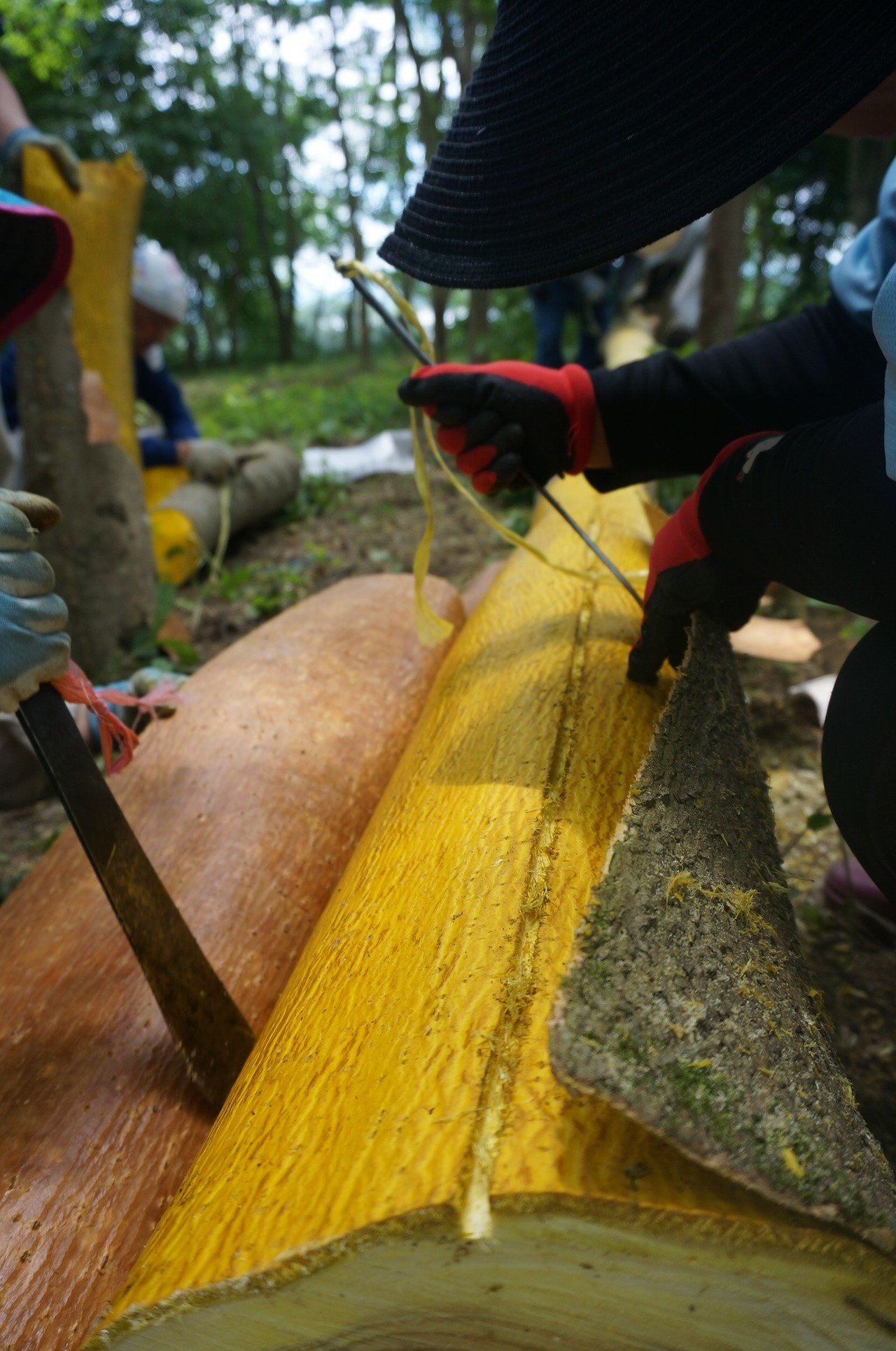
Nara is one of the biggest production sites of kihada. The tradition dates back to Nara period 1300 years ago, when shugendo (Japanese traditional religion of mountain worship) was established. Kihada was used by shugendo monks to treat stomach ache. The yellow color extracted from kihada tree is vivid and remarkable, which has been believed to have anti-macrobial effects and to ward off bad spirits. In fact, the yellow substance is found to be berberine, a sort of alkaloid, which has anti-bacterial effects and lowers blood pressure.


Natural dye
The bark can be used for natural dye.It's originally so yellow that there's no need to use color fixing mordant, just boiling the bark for 20 min is enough to have vivid yellow color.
Dyeing linen clothes.

Cotton masks


Cooking
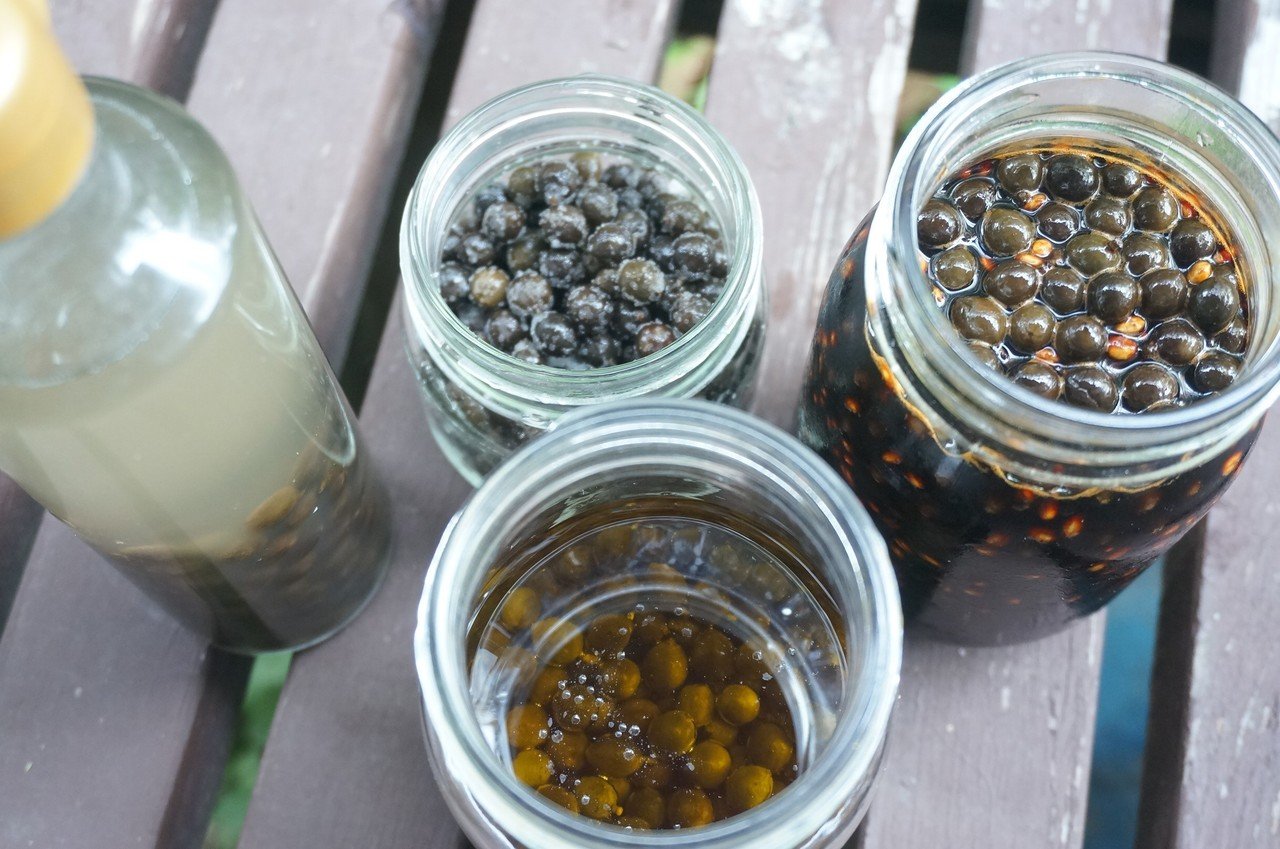
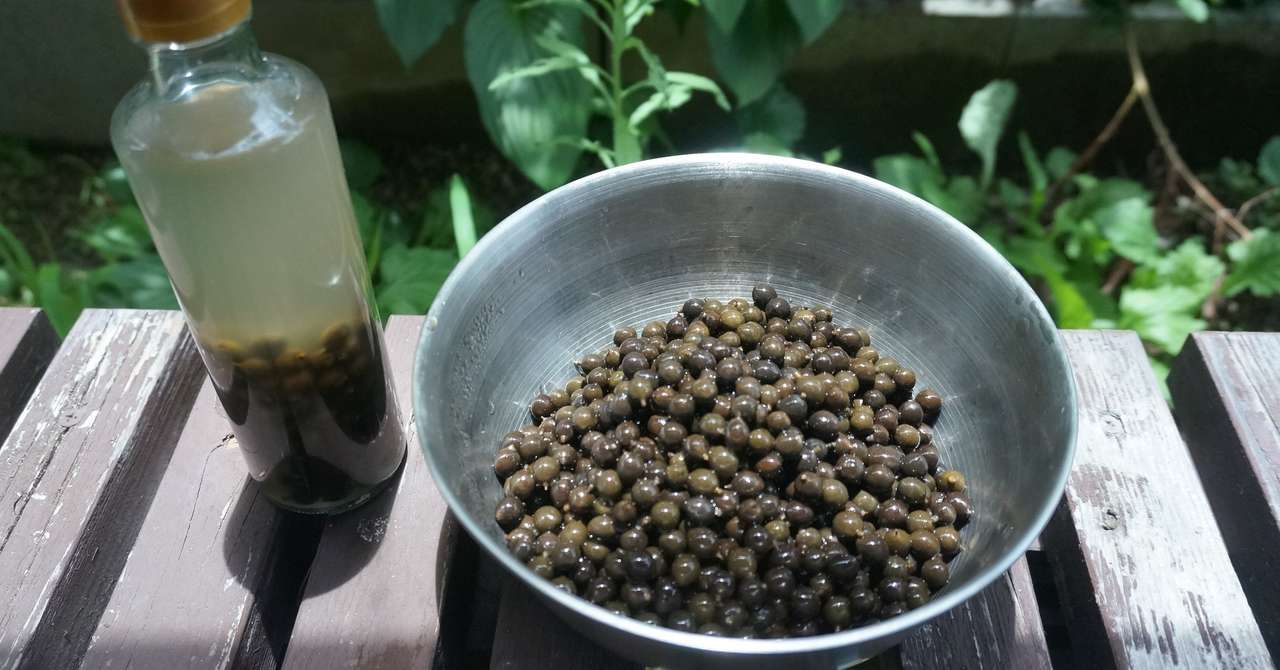
Not only barks but also leaves, roots, and the fruits can also be utilized. The leaves can be used for making tea, and the fruits taste like Japanese pepper sansho, unique spice in Japan. That can be used for honey mead, preserved with olive oil, soy koji, verger, salt and so on.
Ainu people (ethnic group in Hokkaido) also use fruits of kihada. They pick the fruits when it's half black, half fresh green, and hang it on the eaves till it's ripen (black). The fruits are believed to have anti-inflammatory effect and Ainu people use it as cough drop by boiling with brown sugar.
Soap, ointment
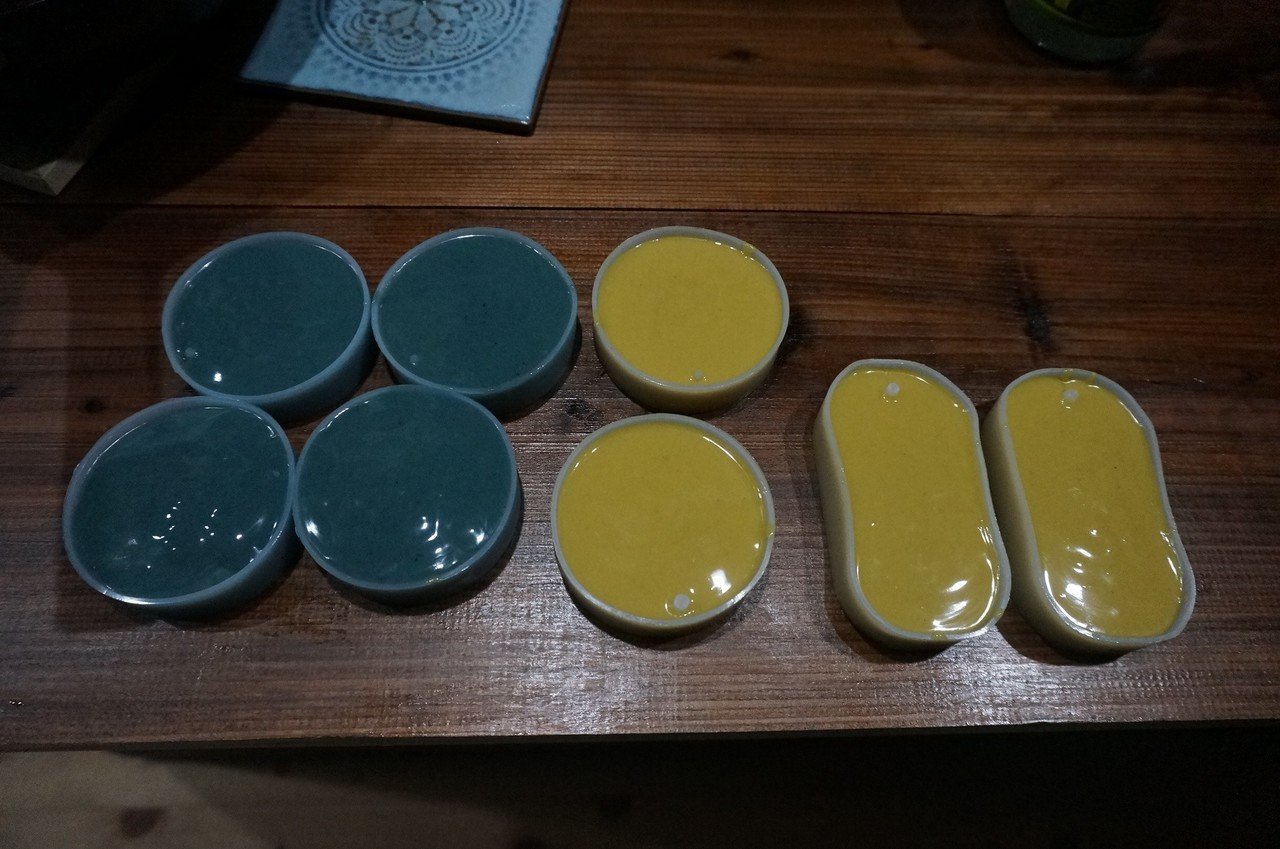
The bark can be also used for making soap and ointment. It's good to treat bruise or insect bites.
making ointment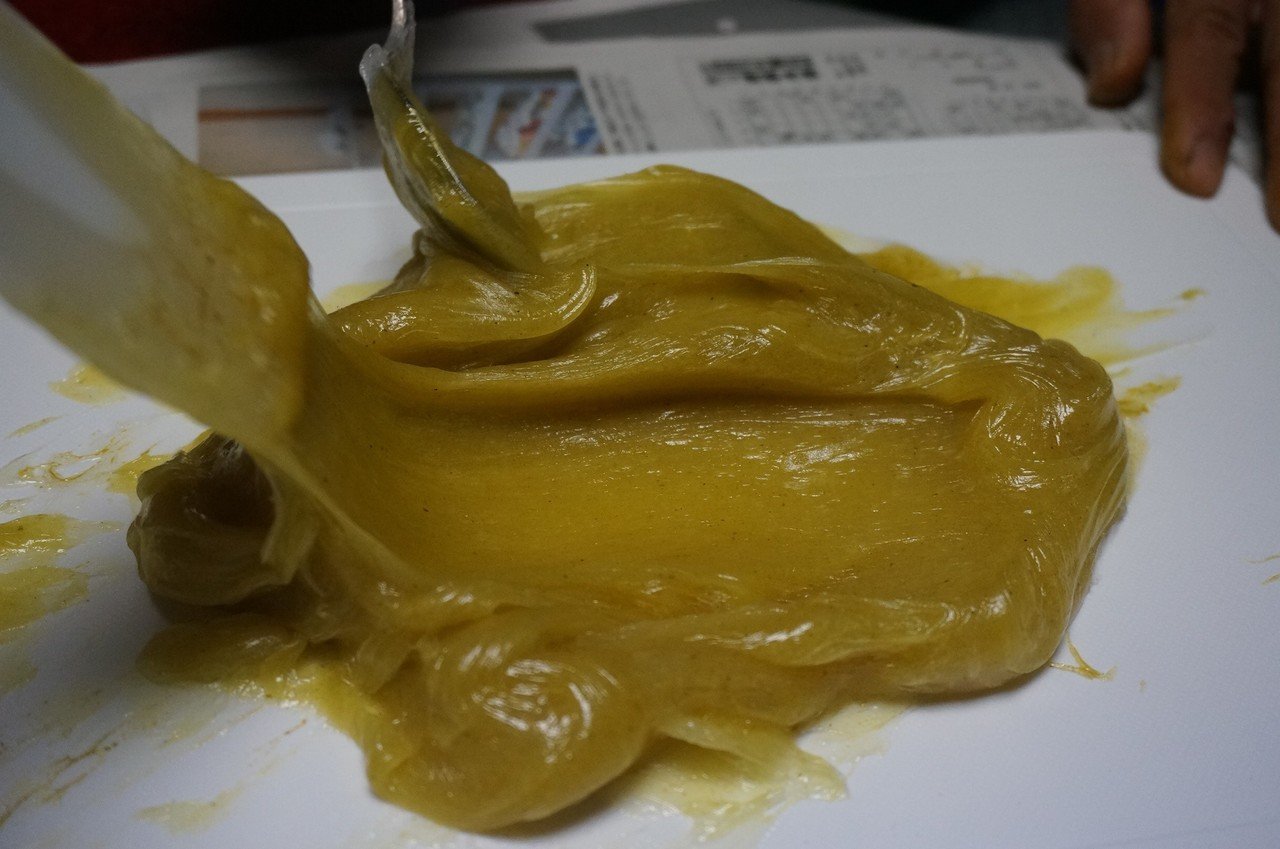
Kihada is versatile, used for multiple treatments. In Nara, processing kihada is a seasonal tradition during early summer. There are many farmers processing the tree, and volunteers are recruited.
Traditionally, only bark has been used, and rest parts are thrown away during the process. Now, there are some trials to utilize the core part for wood works, leaves for making tea, and fruits for spice. Its potential would be unfolded.
Saturday, 27 June 2020
Natural plant dye with traditional cooking pot

Today, I learned how to dye with Ruri-san, who taught me how to dye in Southeast Asia.
Ruri Kitadai's blog "Travel and Colors" (Japanese only)
http://rurilapis.blogspot.com/
Collecting plants while listening to stories about how to make mordant liquid and the wisdom of textiles and plants from Asian countries.
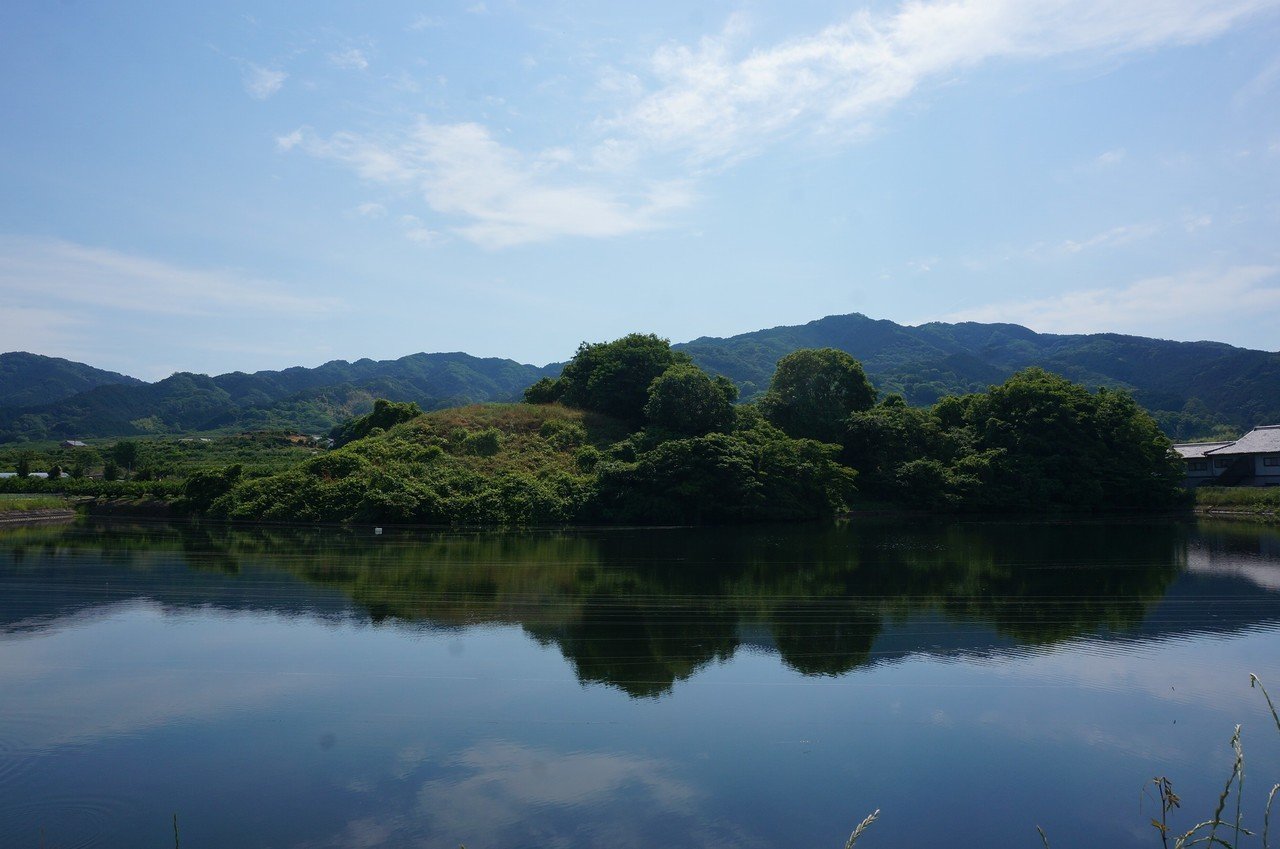
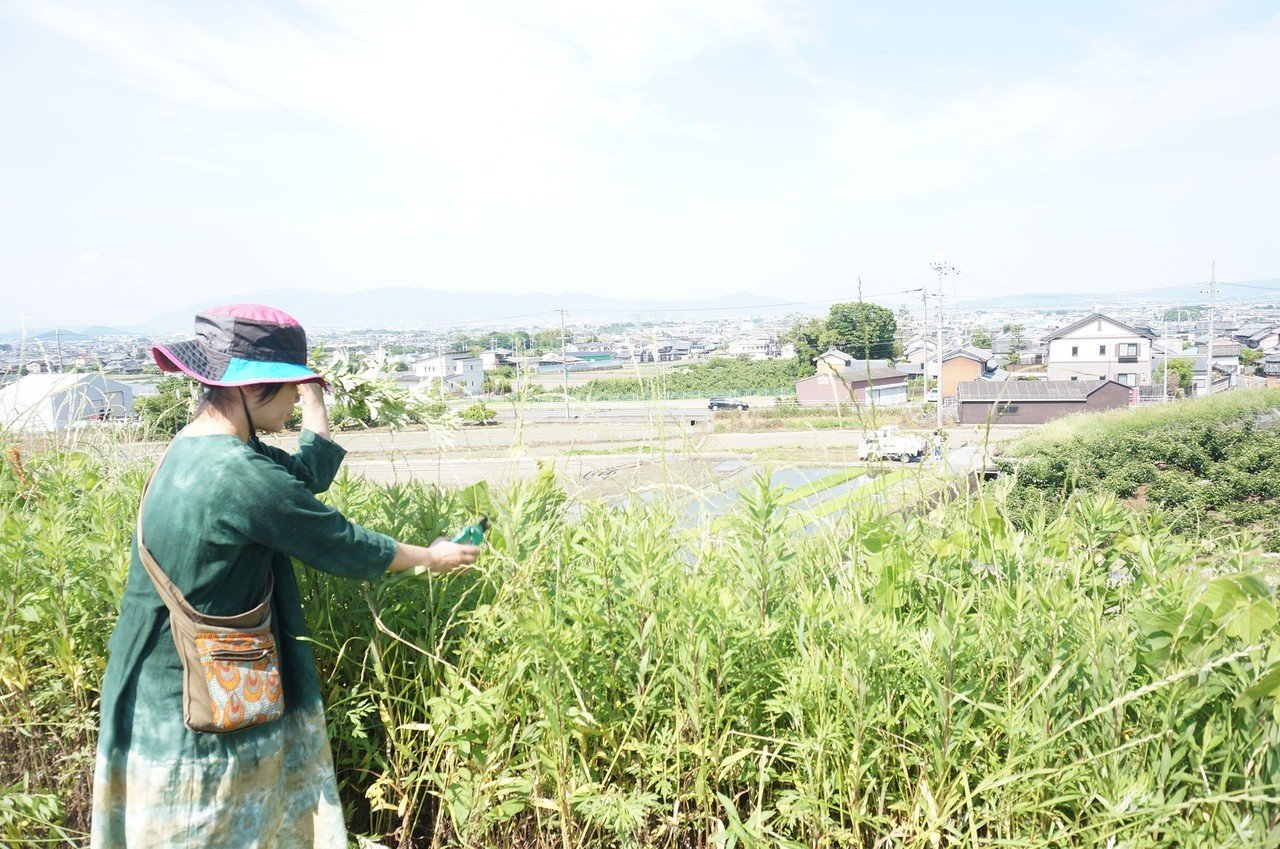
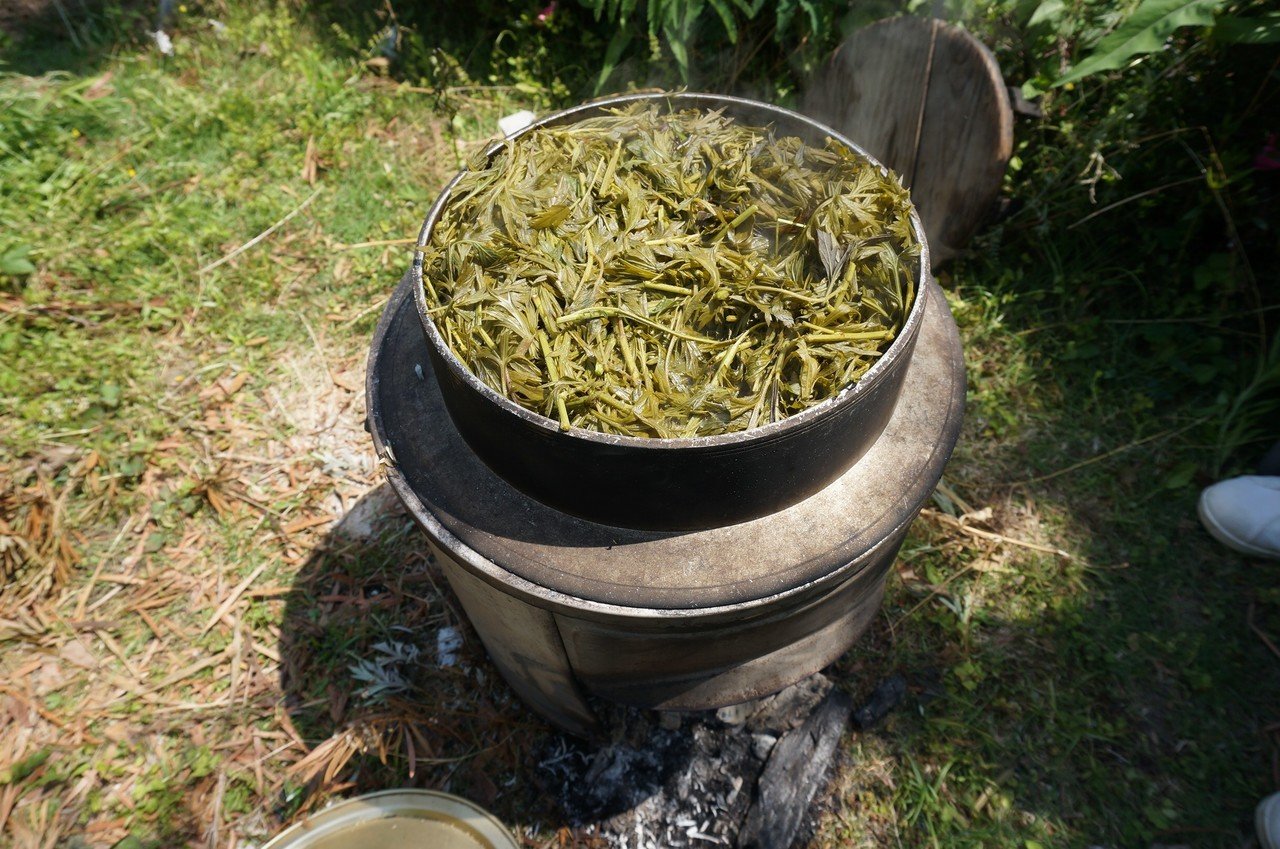
まずは羽窯で染液づくり。よもぎをぐつぐつ煮出していきます。
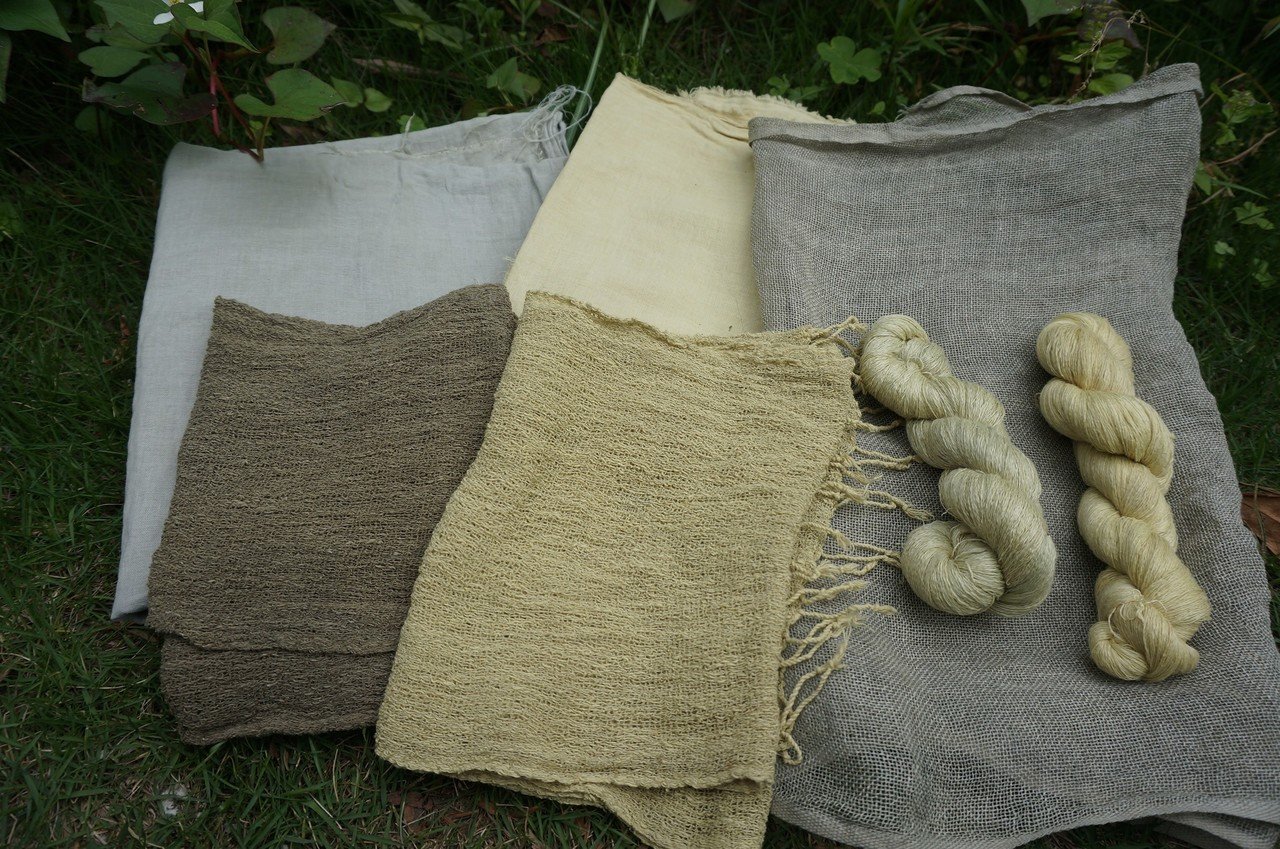
鉄媒染は、酢と鉄釘を混ぜたものでオリーブ色に。ミョウバン媒染は黄色になります。
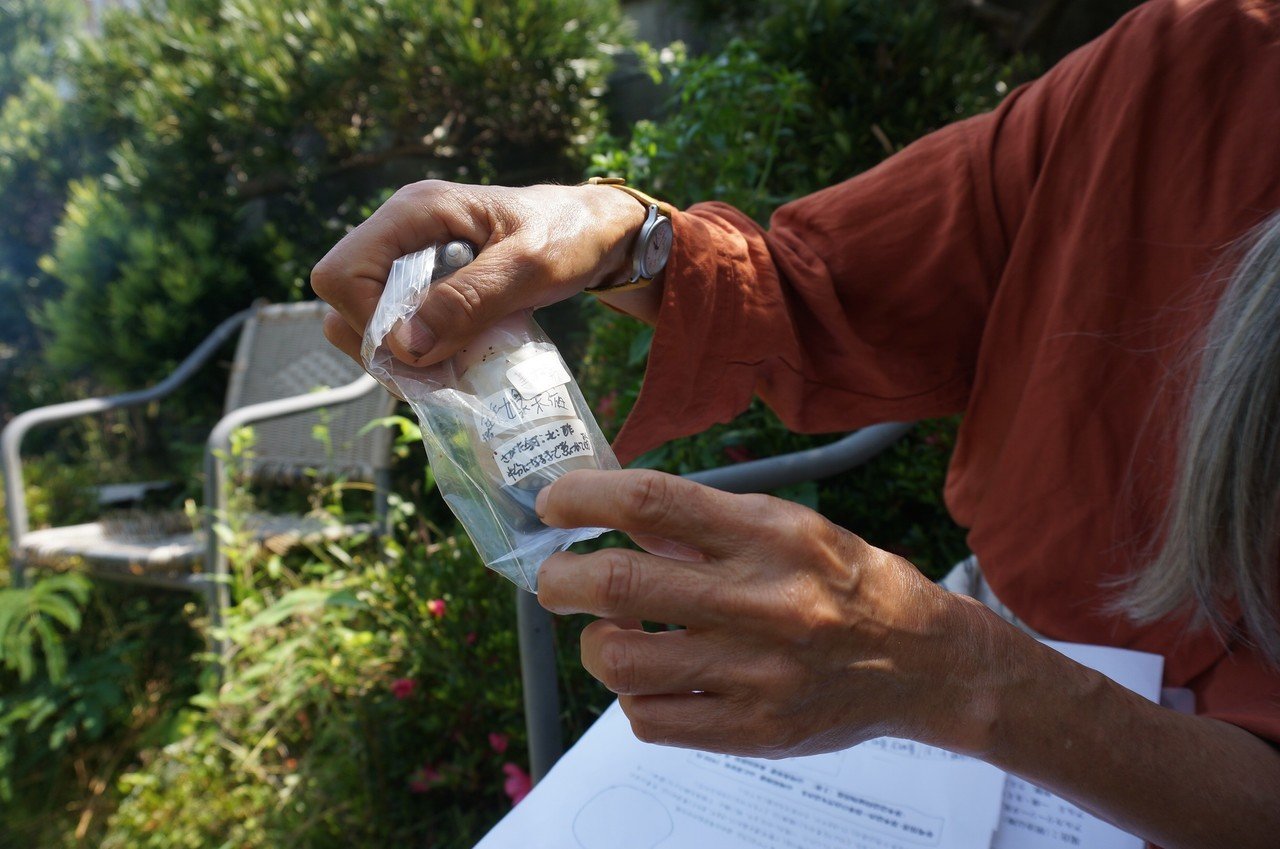
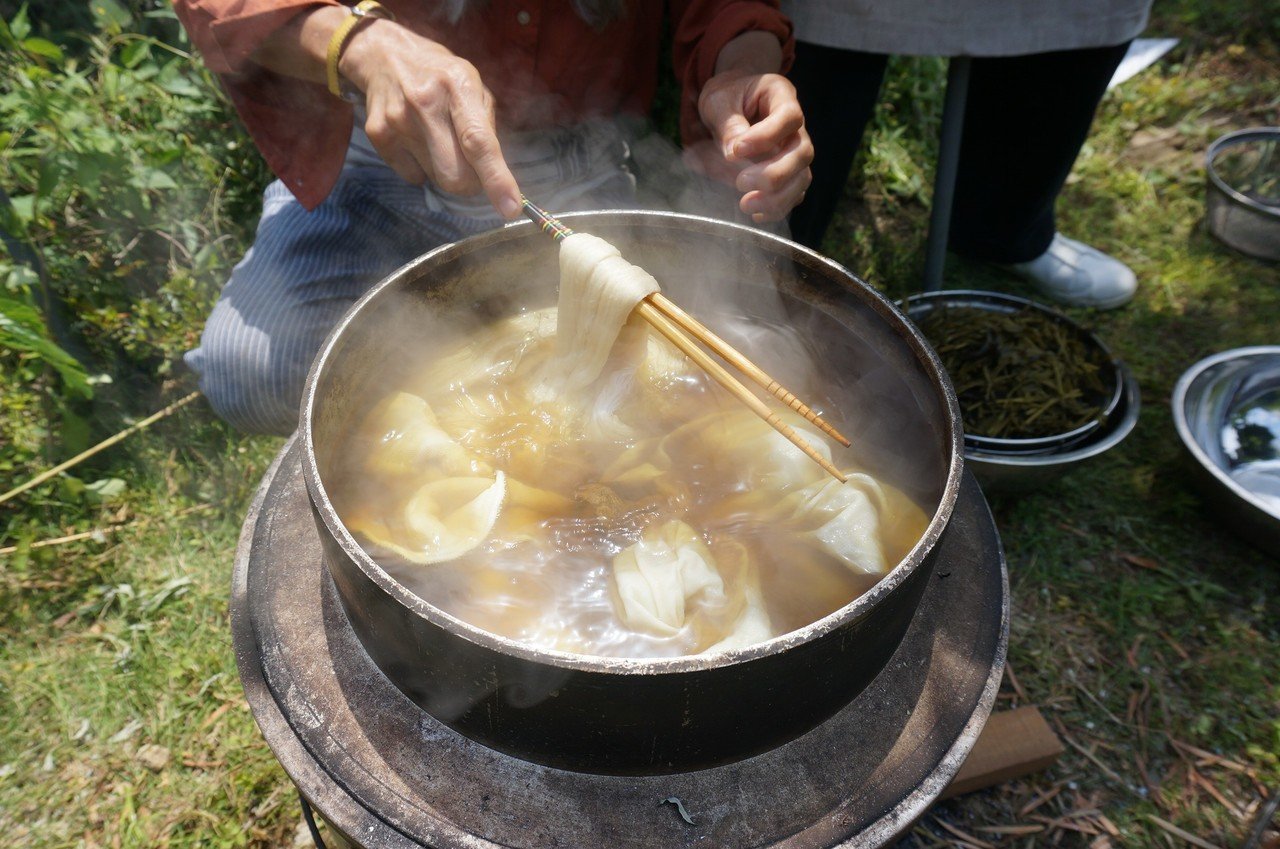
Strain the mugwort through a colander and place the cloth in the dye solution; simmer for 20 minutes. As soon as it boils, the water overflows, so it is difficult to maintain the heat at low heat. I need to change the charcoal material at the beginning, middle and end of the cooking as same as the Okudosan cooking. The same as stewing, you have to turn off the heat and let it soak until it cools down so that it will gradually soak through.
(Silk can be dyed as it is because of its animal protein, but hemp and cotton have been pre-treated with Kureju (Japanese soup). There are many different ways to prepare the groundwork for dyeing in different countries, so it is interesting to think about dyeing folklore. (It's interesting to think about dyeing folklore because there are many different ways to prepare the groundwork in different countries.
Translated with www.DeepL.com/Translator (free version)
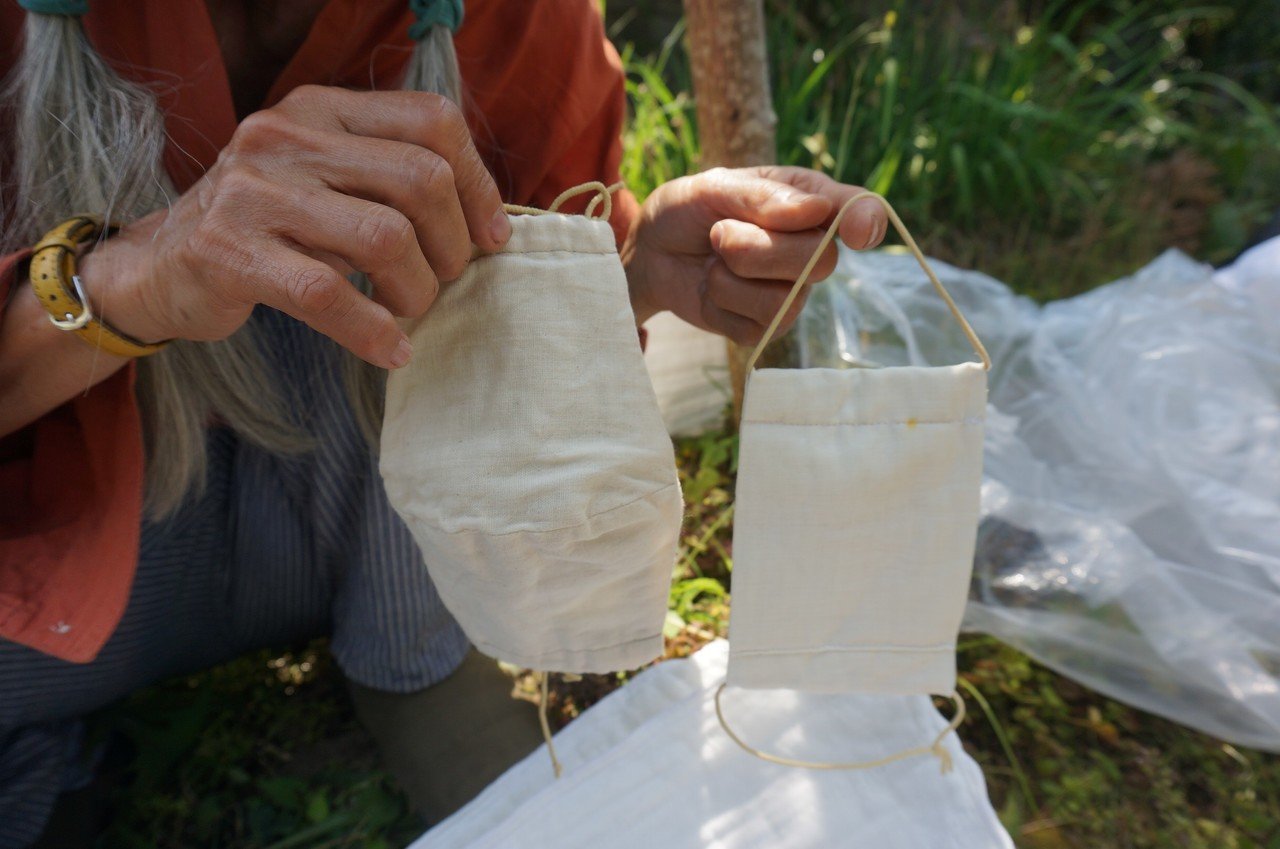
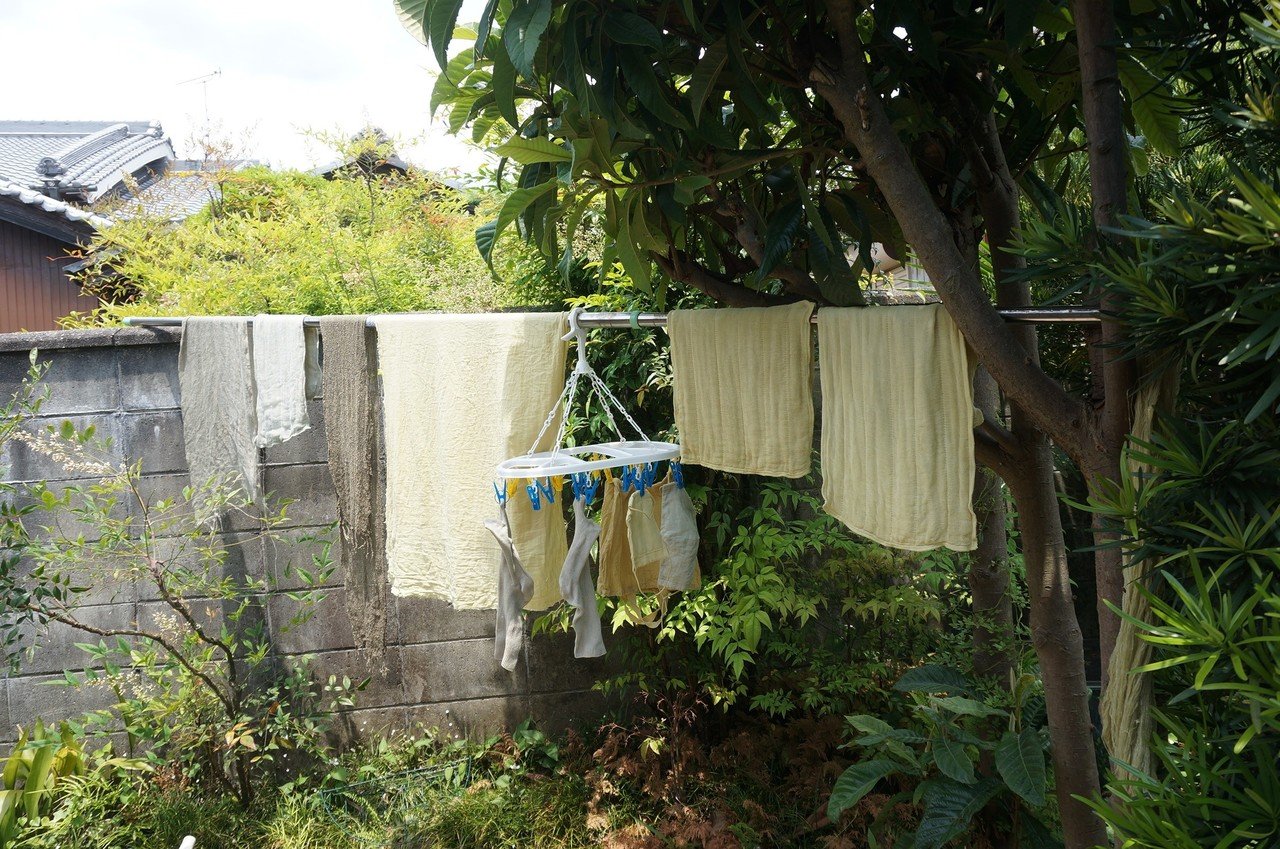
Abeno-mask looks nice when it is dyed
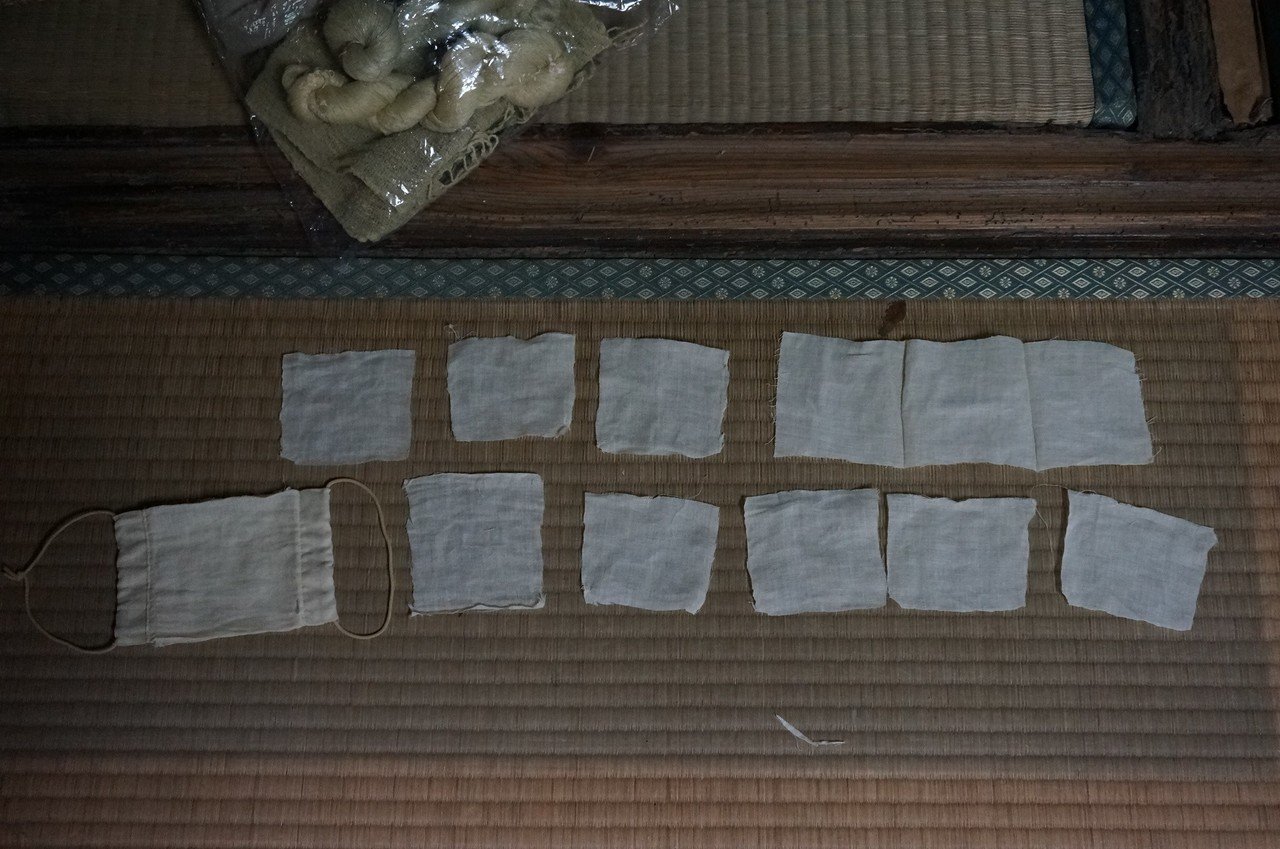
Abenomask is disassembled
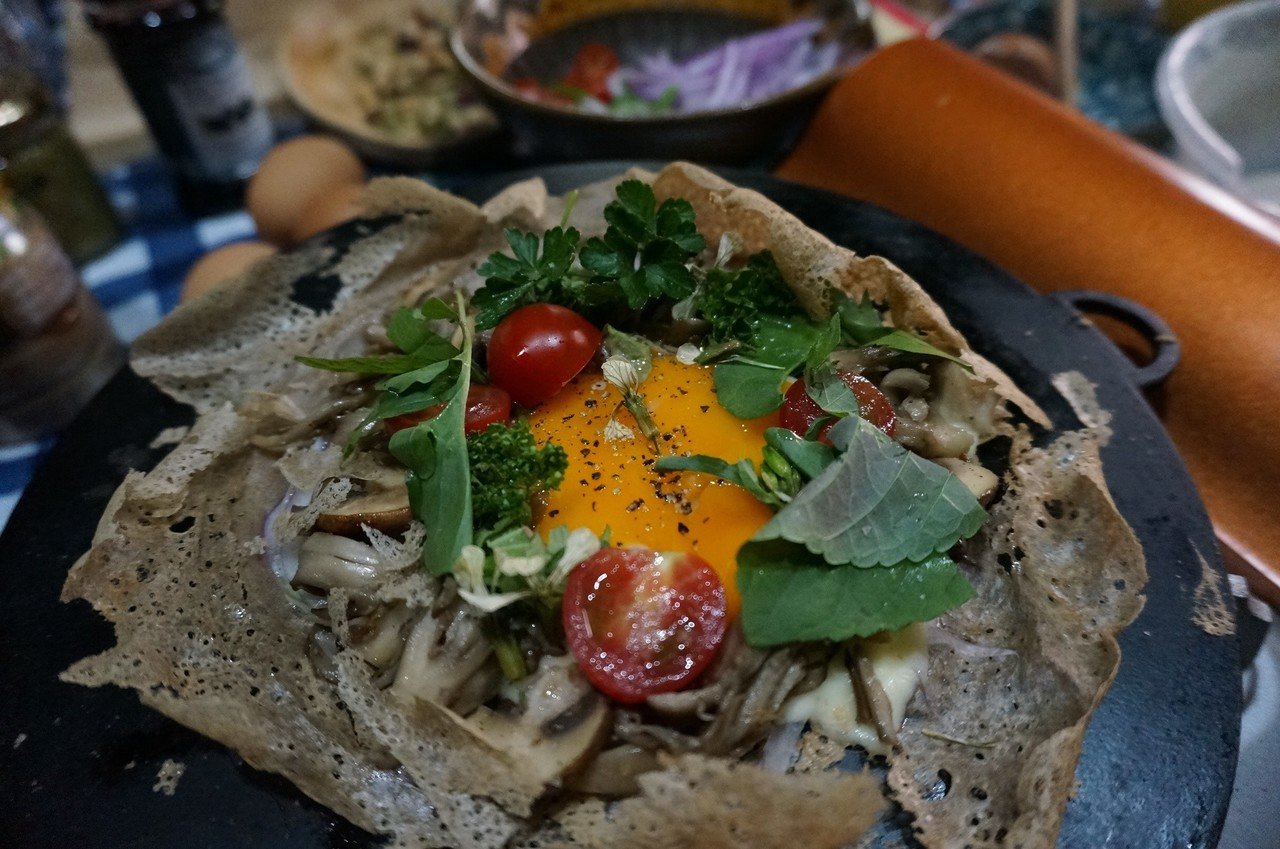
I made galette with buckwheat flour for lunch. This is difficult. If it's not spread thin, it's just a crepe. Topped with sesame seeds from the garden, arugula, parsley and sprinkles.
同じ染料でも、媒染液や布の材質によって様々な色に染め上がりました。
Saturday, 7 April 2018
Hidden places of cherry viewing and secret sweets

Tour to visit hidden beauty spots for viewing cherry blossoms, visiting 8 temples and private residences and eating 3 tailor-made sweets
Cherry blossoms of Yoshino in Nara is famous for its thousands cherry blossoms in the mountain, however, in Yamato plateau there are also several unknown beauty spots as well.
In the tour, we explored 8 different cherry viewing points, along with 3 sweets, which are especially custom-made by sweet chefs for the tour.
 |
| Shorenji temple |
 |
| a local vegetable seller |
 |
| Tenyakuji temple, also famous for its camellia flower |
 |
| katakuri, dogtooth violet |
Custom-made sweets
Ananda's cream puff with cherry flower testes.

Kuzukiri made by a 70-year-old grandma, who were fascinated by kudzu starch produced in Uda and moved to Uda to make kudzukiri.

Mitarashi dingo by Nishi-showado in Utano.


 |
| home visit to see cherry blossoms at a private residence |
The highlight is illuminated cherry blossoms at Hozoji temple in Higashi Yoshino . The cherry tree is said to be 430-year-old, and designated as the natural treasure.


Wednesday, 8 November 2017
Visit producers in Uda: Indigo Japan blue and Medicinal Plant Expedition
After visiting a traditional indigo dyeing atelier, which inherits 150 years old indigo vase, we explored edible forests. Uda city is a historical land, where wild medicinal plant has been conducted, since ancient Yamato dynasty in 7th century.
Wild medicinal plants master taught us how to distinguish porcelain berry (or wild grape, scientific name: Ampelopsis glandulosa) and ornamental grape vine (scientific name: Vitis coignetiae), how to make yakushu, alcoholic beverage for medicinal purposes by using natural resources such as Linden arrowwood (gamazumi in Japanese, scientific name: Viburnum dilatatum), silver vine, cat powder, matatabi in Japanese (Scientific name: Actinidia polygama), deodeok or lance asiabell (Tsuruninjin in Japanese, Scientific name: Codonopsis lanceolata), and so on.
Pick and eat, eat and learn, by using five senses, we learnt traditional knowledge of ancient people on living in co-existent with nature.

Said the 4th generation of Kasama indigo dyeing atelier, Ms Kayo.
In the village of Kasama, there are households earning their livelihoods by dyeing, blacksmith, farming... Nowadays, this knowledge is gradually disappearing. Dyeing workshop and black smith are also last one craftsman.
Ms. Kayo, still has hope to keep the lifestyle living with indigo as it is.


Wild medicinal plants master taught us how to distinguish porcelain berry (or wild grape, scientific name: Ampelopsis glandulosa) and ornamental grape vine (scientific name: Vitis coignetiae), how to make yakushu, alcoholic beverage for medicinal purposes by using natural resources such as Linden arrowwood (gamazumi in Japanese, scientific name: Viburnum dilatatum), silver vine, cat powder, matatabi in Japanese (Scientific name: Actinidia polygama), deodeok or lance asiabell (Tsuruninjin in Japanese, Scientific name: Codonopsis lanceolata), and so on.
Pick and eat, eat and learn, by using five senses, we learnt traditional knowledge of ancient people on living in co-existent with nature.

only use mountain water for 150 years in kasama indigo atelier
"When father-in-low went hospital, I thought someone has to learn how to take care of 150 years indigo vase. My husband is a business person, and only I could do that for the time being. This is how I started to learn, and got deep into this world."Said the 4th generation of Kasama indigo dyeing atelier, Ms Kayo.
In the village of Kasama, there are households earning their livelihoods by dyeing, blacksmith, farming... Nowadays, this knowledge is gradually disappearing. Dyeing workshop and black smith are also last one craftsman.
Ms. Kayo, still has hope to keep the lifestyle living with indigo as it is.


Aizome experience 1,500yen (reservation required)
walk and eat: medicinal plant hunting in the forest.
After lunch, expedition for edible forests. |
Walking and picking wild plants.
|
Gamazumi (Linden arrowwood), good for making yakushu, medicinal liquor.

silver vine, matatabi, is also good for medicinal liquor


Wild kiwi, or baby kiwi (sarunashi in Japanese, scientific name: Actinidia arguta) is indeed little kiwi, when tasted. It is also good for making liquor.

Wild grape.


You can go for medicinal plant hunting most of the season. Next workshop will be making kudzu powder form arrow roots, tuber crop.
We also plan to go for foraging and cook medicinal plants in spring.


What is the taste like?
It is very spicy!! Can you believe?

In Korea, it seems deodeok or lance asiabell is edible in raw, just dipped into honey.
It smells like soil, but the taste is mild, not bitter, not spicy. It is okay to eat as salad by raw.

 |
| flower of deodeok |
Japanese snake gourd (Karasuuri in Japanese, Scientific name: Trichosanthes cucumeroides). The seeds can be used as a talisman for good fortune, and also edible after baking. It could be indeed good luck in case of emergency, when kept into wallet.

Wild kiwi, or baby kiwi (sarunashi in Japanese, scientific name: Actinidia arguta) is indeed little kiwi, when tasted. It is also good for making liquor.


This is similar, but not edible, just beautiful.

We also plan to go for foraging and cook medicinal plants in spring.
Wednesday, 1 June 2016
Visit A Village Of Plant Medicine~Landrace And Rituals~
 |
this is taken in a village surrounded by tea trees.
it seemed to be lost in a world of another time era
|
Village of Traditional Medicine
Today, we will be in off-the-beaten track in Japan to Kasuga village on the foot of Mt. Ibuki. It is not a tourist place, and even not so known to Japanese people
Although Japan is a mountainous country covered with 67% of forest, about 70% of Japanese population is concentrating in the urban areas, and depopulation and aging in rural areas are always big problems. It is pity that tourists only look at big cities and do not see rural livelihood.
Japanese life-style has been changed a lot in recent years, but still, in the deep mountains, isolated from the rest of the world, you can find traditional livelihood and knowledge to live with nature handed down from generations. So, today, I would like you to touch another world of Japan besides tourist attractions.
 |
| shuraku, community of kasuga village |
Can you imagine how to collect foods in the deep forest? Wisdom to read the voice of wind or trees, or to know timing of sowing seeds by observing stars or living creatures. This knowledge has been developed from long-term experiences of their ancestors. Mostly, they are over 80s, and it is about to disappear... I would like to pass down this local knowledge, what I call ground mothers knowledge to overseas as well as Japanese young people.
Kasuga was once known as a village of traditional medicine. The origin of offering yakuso in this region dates back to Nara period in the mid 7th century. There is a record to indicate traditional knowlede of plant medicine was transmitted through the descendant of royal family.
and it is said that about 300 species of medicinal herbs, or yakuso薬草, can be harvested in the region. Such abundant bio-diversity cannot be seen in any other areas, which developed its unique tradition. The villagers earned their livelihood on medicinal plants since civil war period around 15th century.
Now, most of the yakuso used in Japan are imported from china, and the industry of yakuso has been desolated. Still, the villagers grow yakuso continuously for their domestic use to maintain their health or to treat illness by themselves.
 |
| medicinal herb lunch |
Kitchen pharmacy
Rural livelihood was highly dependent on farming. The festivals, belief, food culture are all based on agricultural system in the region. The farm for a vegetable kitchen garden is called Tadabata, farm in the deep mountain is called miyama, or kyubayashi, and in mutsushi, shifting cultivation was conducted.
They differentiate and classified their types of lands, and called by unique land names.
Their medical herb farms are located in the path of Mt. Ibuki, but also they have their own garden with various yakuso.
 |
| Toki, or dong-guil in chinese |
toki当帰 (Angelica acutiloba)is largely grown in front of the villagers' house.
It was originally from china gang-gui in chinese, and its roots are processed to be a traditional medicine.
 |
| drying yakuso in front of their houses |
In addition, there are varieties of medicinal plants can be found in their garden;
Megi (Berberis, barberry), Kihada ( Phellodendron amurense, Amur cork tree), Genno shoko (Geranium thunbergii) , Shishiudo(Angelica), Utsubogusa(Prunella vulgaris), Amacha (Hydrangea macrophylla var. thunbergii), Natsume.(Ziziphus jujuba)..
These are typical plants used for making crude medicine.

This tool is called oshigiri, chopper used for cutting medicinal herbs. There are at least one of these at each house to make domestic medicine.

Ibuki hyakuso 伊吹百草 is a mixture of hundreds of herbs and the prescription is different in families, and also the components will change in different seasons.
in winter time, it is preserved by dried, salted, or kept in the alcohol liquor.

Ethno-botanical knowledge
Hemp cultivation was banned after the World War, but it had been used for Shito rituals since long long time ago.
hemp clothes was called "Nono".
It is still cultivated in the village of Ibuki anther the special exemption from government for rituals.
 |
| 麻の糸 thread of hemp |
 |
This is Linga (phallic symbol) in the shrine
|
While I was in Bhutan, I saw similar talisman against evil in the village, but I did not know that there is similar custom in Japan, too.
 |
| Linga in Bhutan |
Glutenous rice is essential for making "shimenawa"
"hattai mochi" in Shiga, "Asahi mochi" in Kyoto, "Kagura mochi" in Tango peninsula (traditional varieties of glutenous rice) for shinto rituals are inherited for the rituals.
the straw of glutenous rice contains more oil and it is softer and suitable for making a rope.
"hattai mochi" in Shiga, "Asahi mochi" in Kyoto, "Kagura mochi" in Tango peninsula (traditional varieties of glutenous rice) for shinto rituals are inherited for the rituals.
the straw of glutenous rice contains more oil and it is softer and suitable for making a rope.
 |
A shrine was in a deep forest
|
They also offer a learning course of traditional herbal medicine there.
Subscribe to:
Posts
(
Atom
)


