Showing posts with label food. Show all posts
Monday, 19 November 2018
How to make Natto, fermented soy bean
Fermentation is a basis of Japanese cuisine. The key seasonings, such as miso, soy sauce, venegar, sake, mirin (sweet sake) are all fermented products. Furthermore, tsukemono pickles, nukazuke, natto, also add flavor on daily meals.
Some people do not like natto, because of its strong flavor and stinky smell, it is Japanese food culture to have natto on top of rice, typically served with miso soup.

It is very interesting to make various types of natto in combination of diverse beans and plants, from which natural bacteria can be harvested. It should not be always "soy", but it is possible to make natto by using kidney beans, peas, black beans, azuki beans, and even rice, or other grains as well!
In Japan, we use rice straw to harvest natto bacteria, however, in other asian countries, various plants are used, for instance, banana leaves are used in Thailand, and in Myammer, it is believed that a certain kind of fern can make the best natto.

Here is a report on the combination of plants and beans:
Table of fermentation: Natto from the world


natto, salted koji, amazake, soy sauce, chili, seaweeds

Some people do not like natto, because of its strong flavor and stinky smell, it is Japanese food culture to have natto on top of rice, typically served with miso soup.

History of natto in Japan
Formally, the first historical record of natto dates back to 11th century, but it is said that natto already existed in Yayoi period (300 BC–300 AD), when beans started to cultivate in Japan.
The ingredients are simple; only boild bean and straw, or even any kinds of wild grasses are possible to ferment soy beans. It is said that natto became popular among worrier, since it is handy to bring soy beans to battle field, wrapped by straw, then soy beans got naturally fermented.
Natto became commercial products in Edo period (1603 – 1868), and spread all over Japan. Especially, natto produced in Mito in Ibaragi prefecture is popular. People in the eastern part of Japan more often eat natto, compared to the west.
Merit of natto
Why fermented foods became widespread in Japan? One of the advantage of fermentation is that harvested crops can be preservable for longer term, especially in rural area, crops can be harvested a lot at one time, and less in winter season. It is required to stock food and prepare for off-season. Also, fermentation adds much more nutrition value as well.
The other advantages of fermented soy beans are;
- It contains Nattokinase
- It is rich in protein, Vitamin K, B2, B6 and E, mineral, and fiber
Especially, in Japanese cuisine, soy bean products such as tofu, miso, natto are major protein sources.
How to make natto
It is fermented with Bacillus subtilis, which grows under the aerobic condition.It is very interesting to make various types of natto in combination of diverse beans and plants, from which natural bacteria can be harvested. It should not be always "soy", but it is possible to make natto by using kidney beans, peas, black beans, azuki beans, and even rice, or other grains as well!
In Japan, we use rice straw to harvest natto bacteria, however, in other asian countries, various plants are used, for instance, banana leaves are used in Thailand, and in Myammer, it is believed that a certain kind of fern can make the best natto.

Here is a report on the combination of plants and beans:
Table of fermentation: Natto from the world
Recipe:
- Soak beans for 6-24 hours depending on variety and temperature
- Steam soy beans or other types of beans and peas
- Inoculation: Wrapped with straw or other leaves
- Keep it warm for 24-48 hours
- Keep it in fridge for 24 hours (the taste will be better after leaving one more day)


How to use natto
If you do not like the strong smell of natto, you can also use it as a seasoning.
Natto shoyu
blend following ingredients;natto, salted koji, amazake, soy sauce, chili, seaweeds
Natto dressing for salad
blend with;
natto, leek, radish, ginger, lemon, vinegar

Sunday, 7 October 2018
3-Day fermentation workshop to learn key seasonings of washoku
3-Day The Art of Fermentation Workshop
We organized 3-Day fermentation workshop to learn key seasonings of washoku, Japanese cuisine, making several fermented foods and visiting local miso, shoyu, sake breweries in Nara.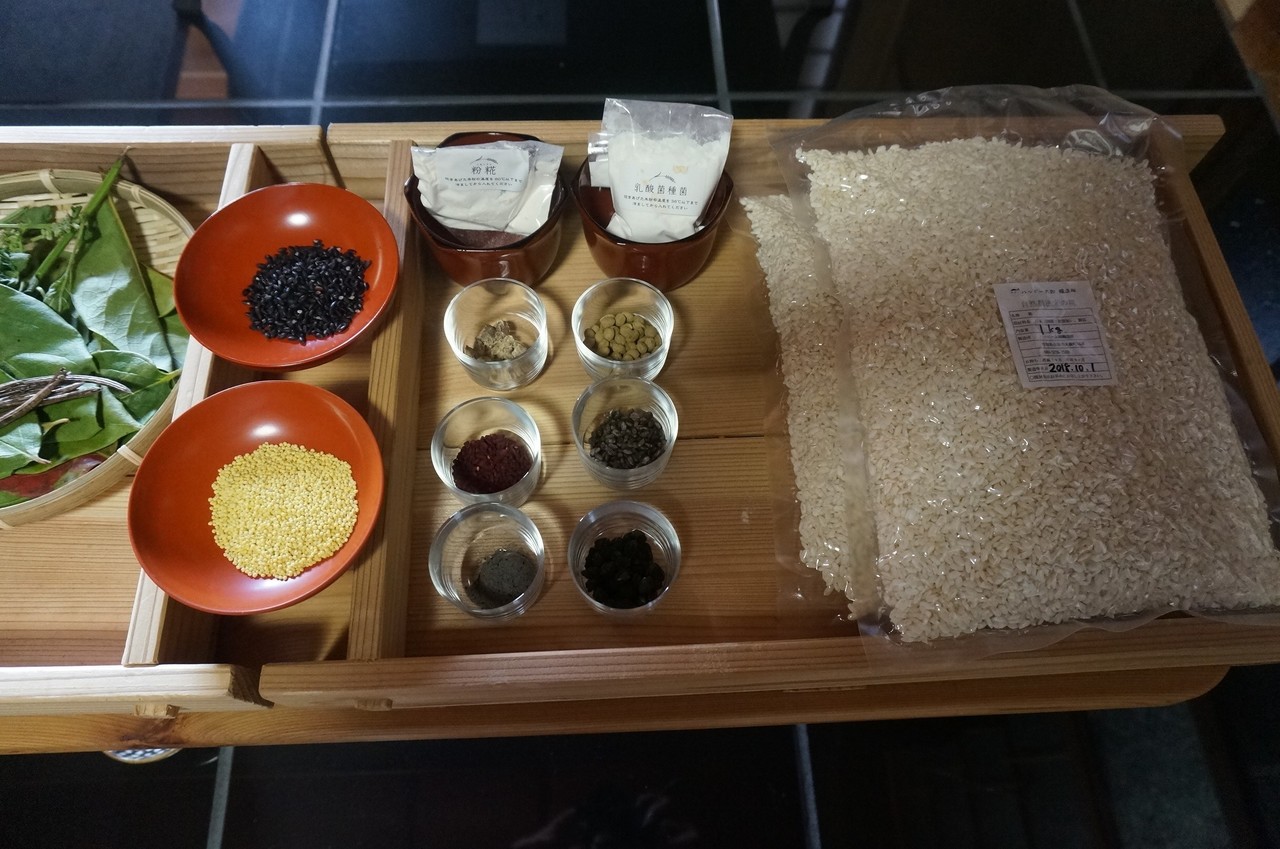
"How can I make koji?" "Where can I buy soy bean koji malt?" "How to controle temperature and pH?"
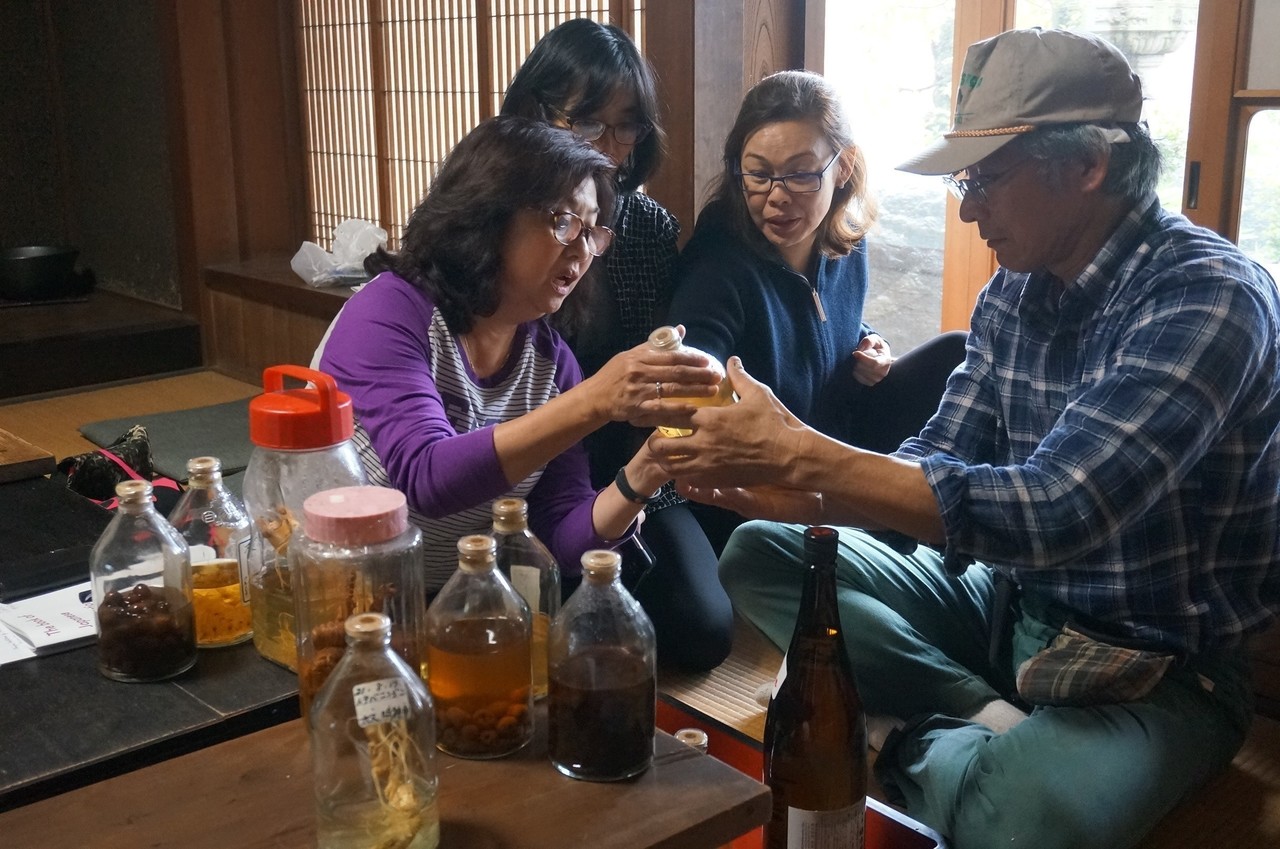
Participants are all enthusiastically ask many questions regarding Japanese fermentation culture during 3-day workshop.
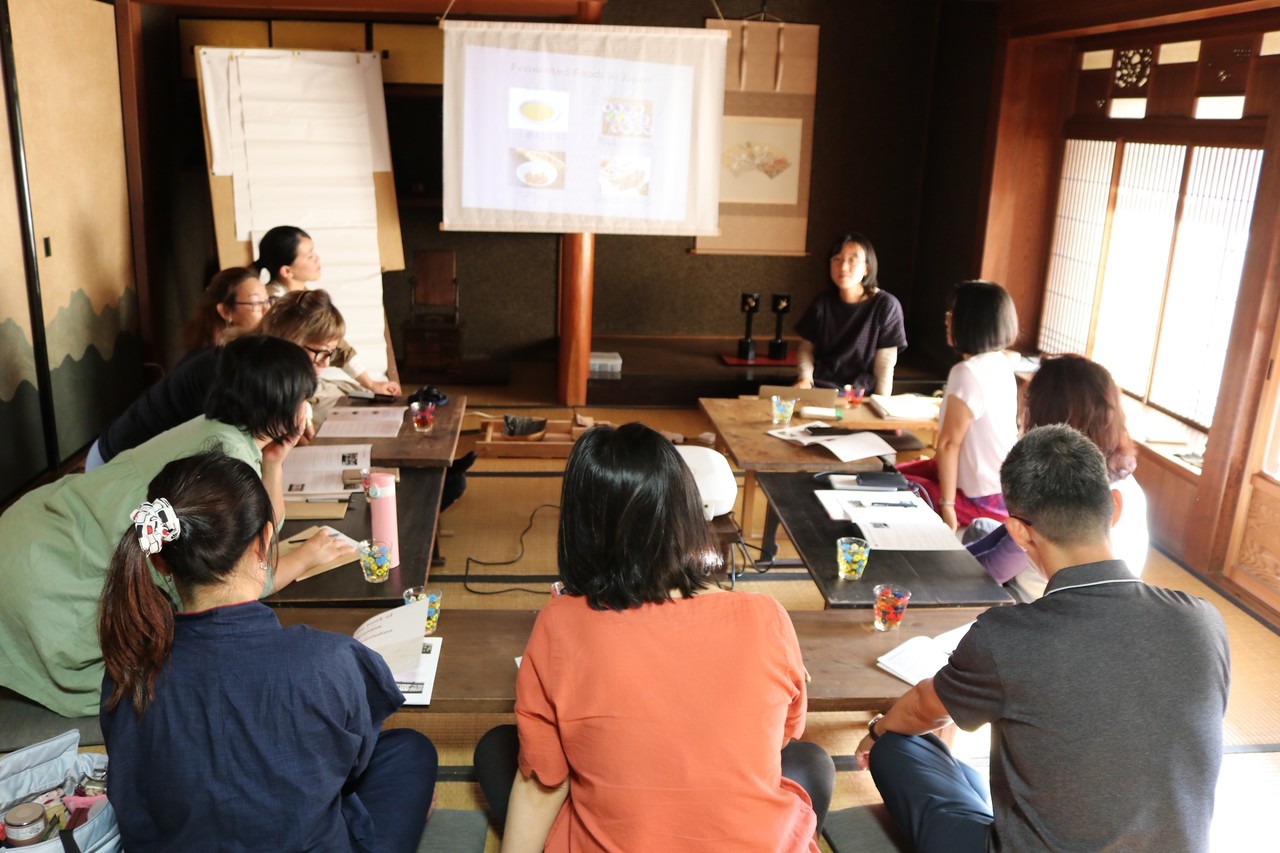
Participants are all enthusiastically ask many questions regarding Japanese fermentation culture during 3-day workshop.
Starting from koji rice malt, we made shoyu, nattou, amazake, soy yogurt, and also tasted various fermented seasonings.
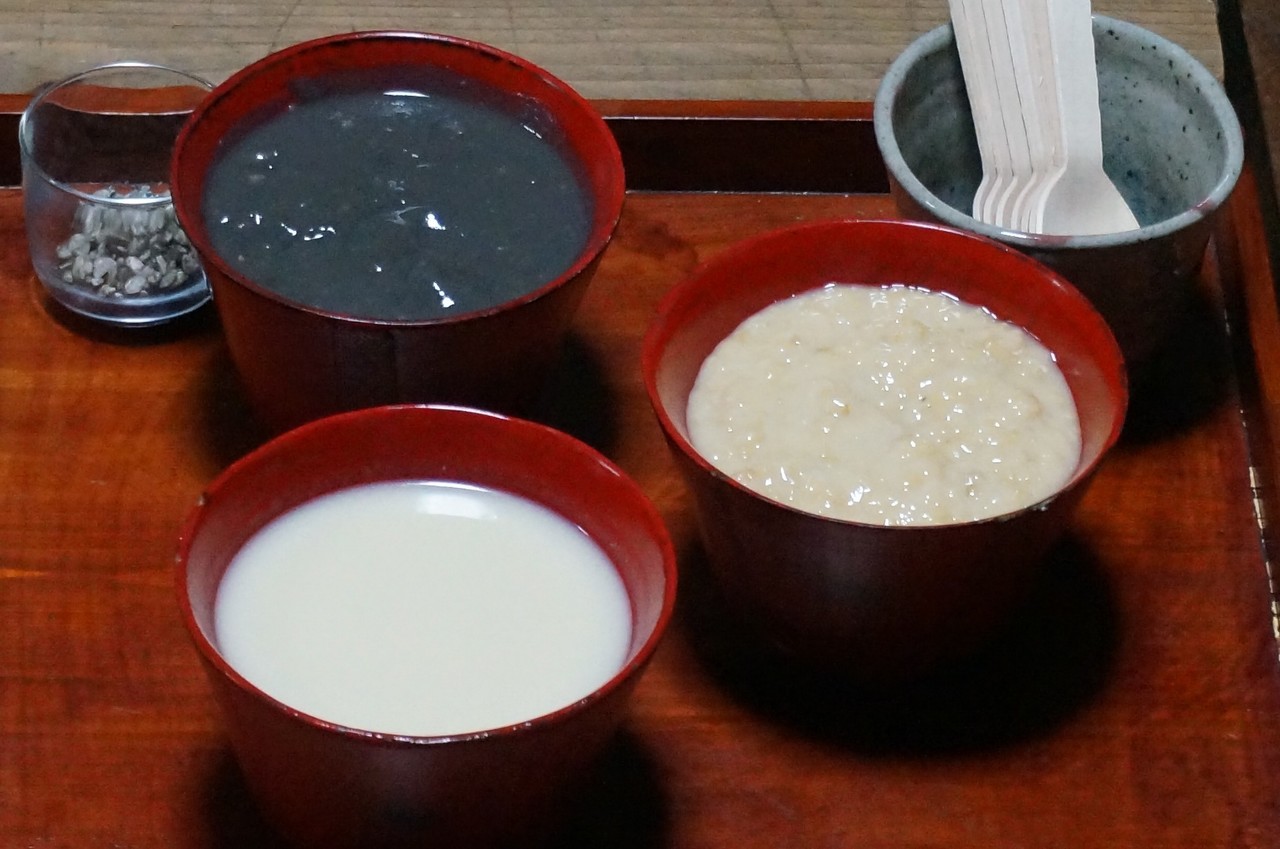 |
| amazake tasting |
 |
| making nattou |

 |
| shio koji (salted rice malt) |
 |
| tasting miso |

Learning how to make miso at miso family-run local miso-maker.
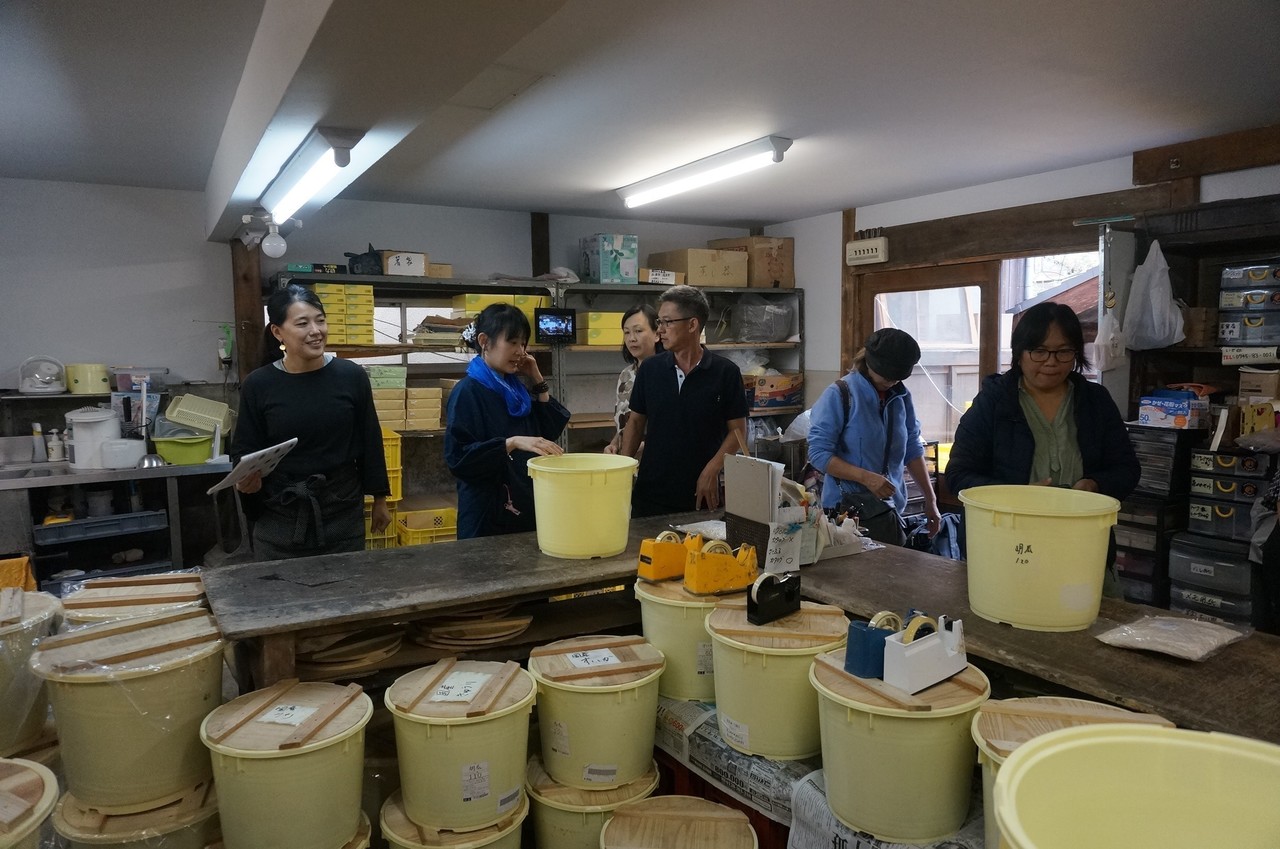
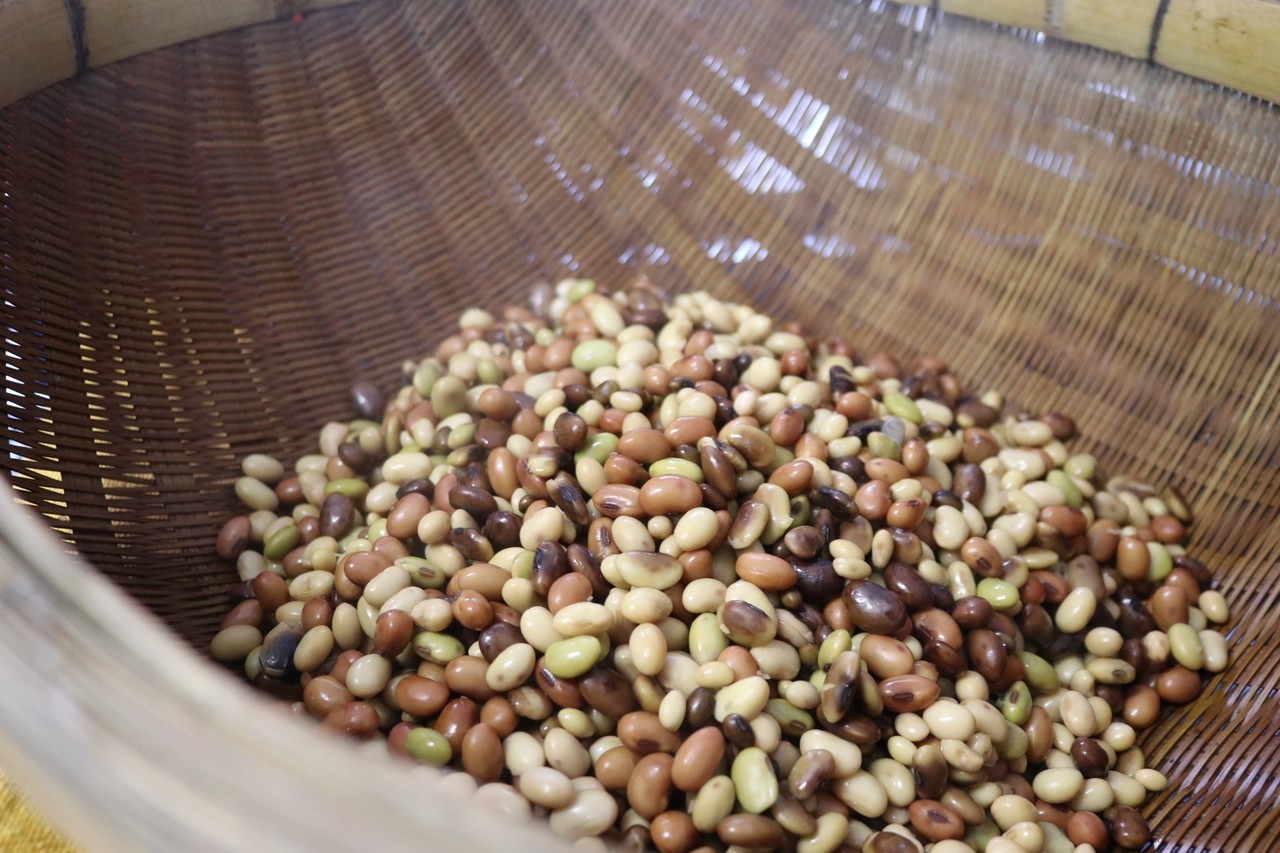

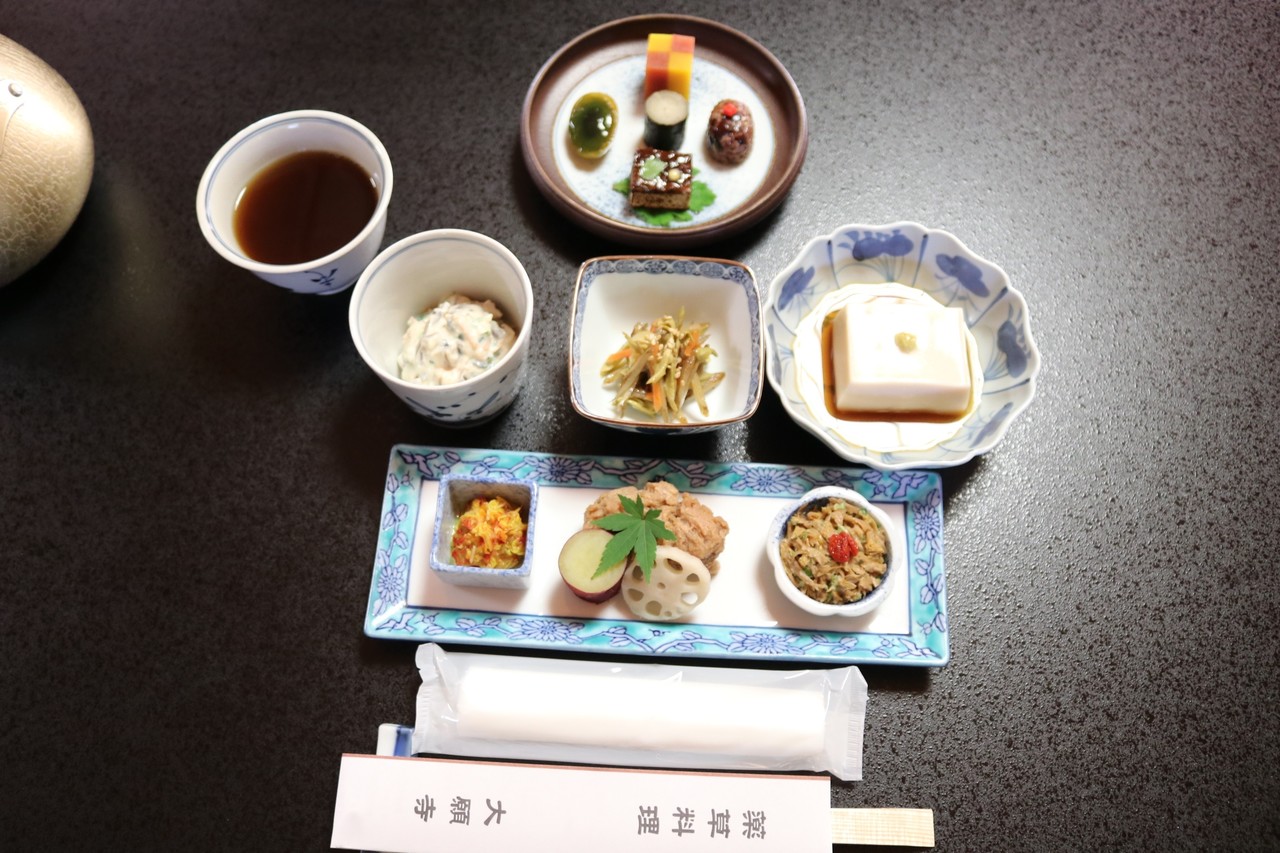
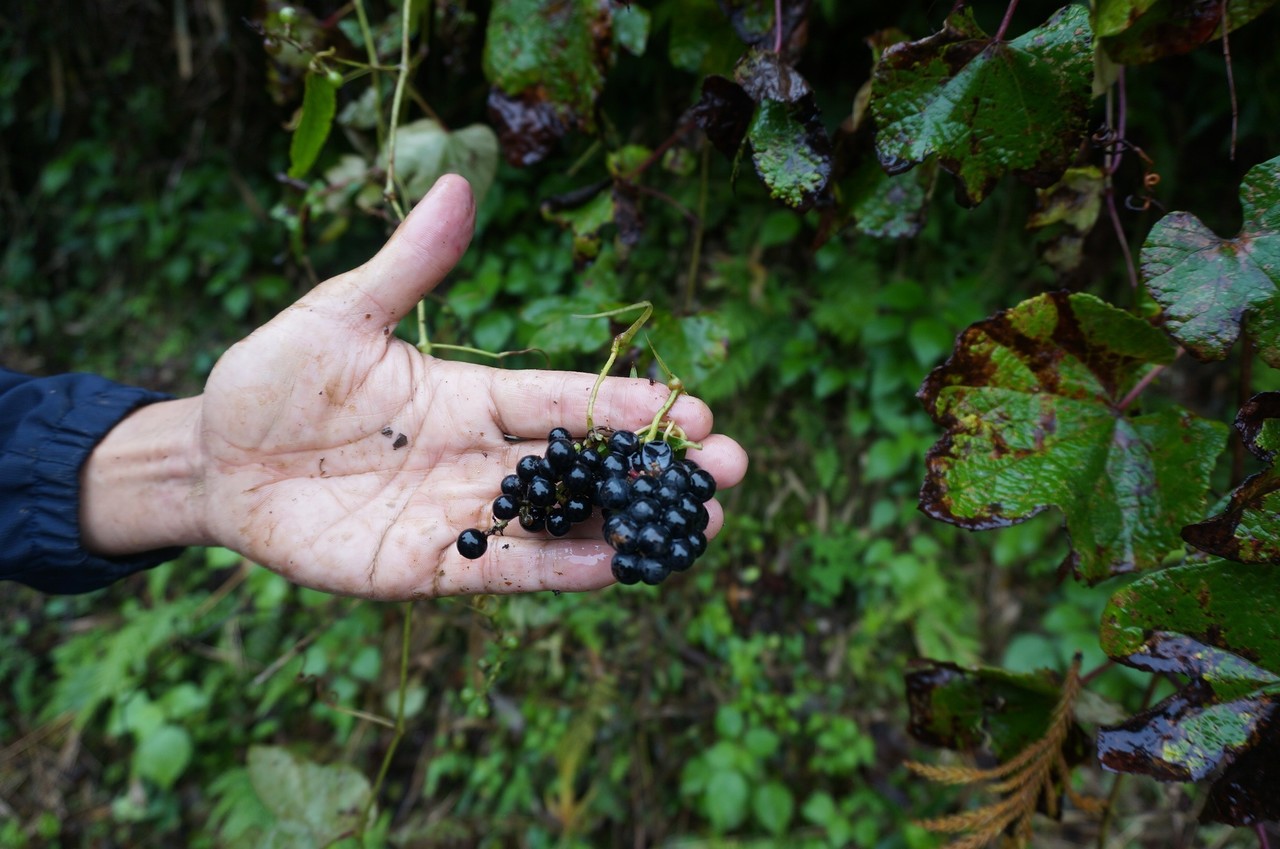
Uda city is the birth place of medicinal herb in Japan's history. We also tasted medicinal plants shojin ryori at Daiganji temple, and went for plant hunting with a local guide.
 |
| shojin ryori at Daiganji |
 |
plant hunting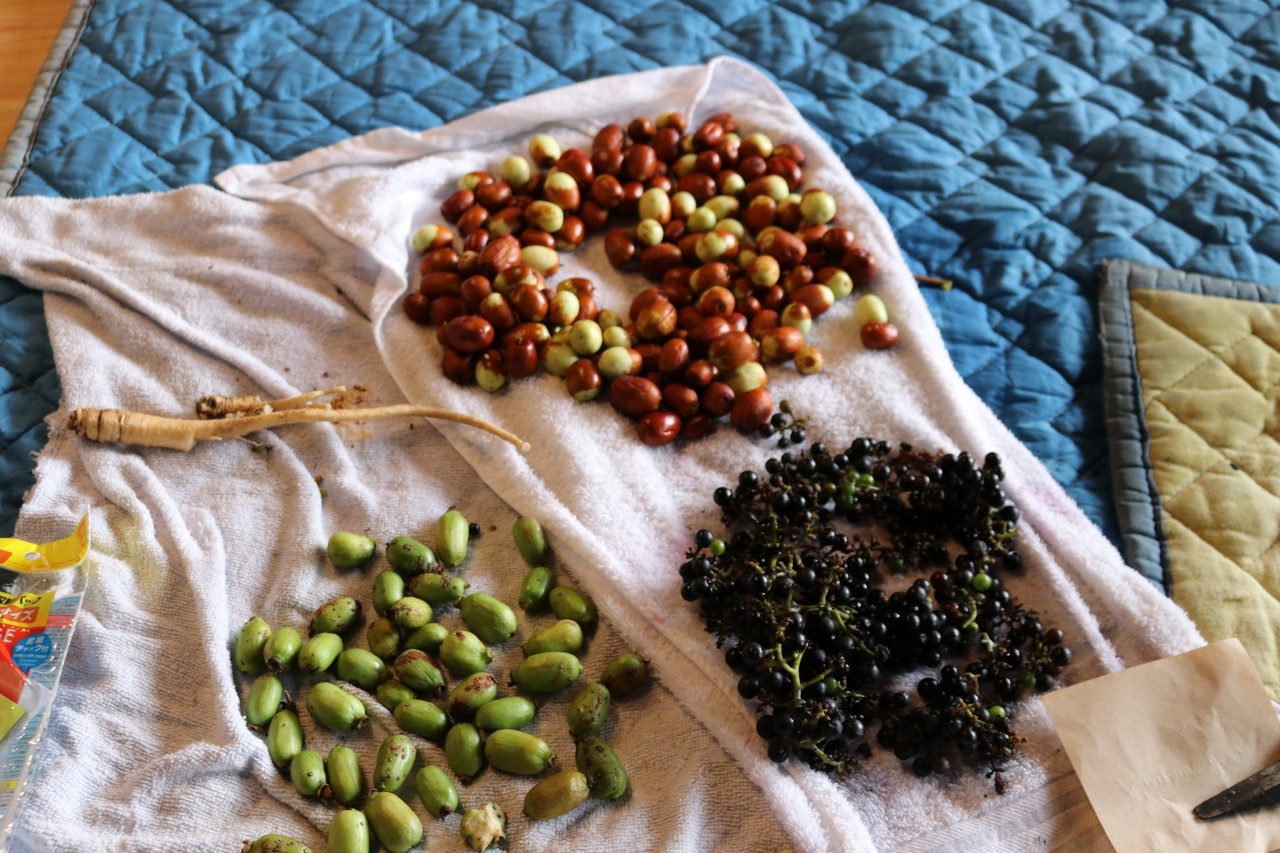 |
Lunch was provided by "Nagino mori", a vegan chef, who prepared various recipes using plenty of fermented seasonings.


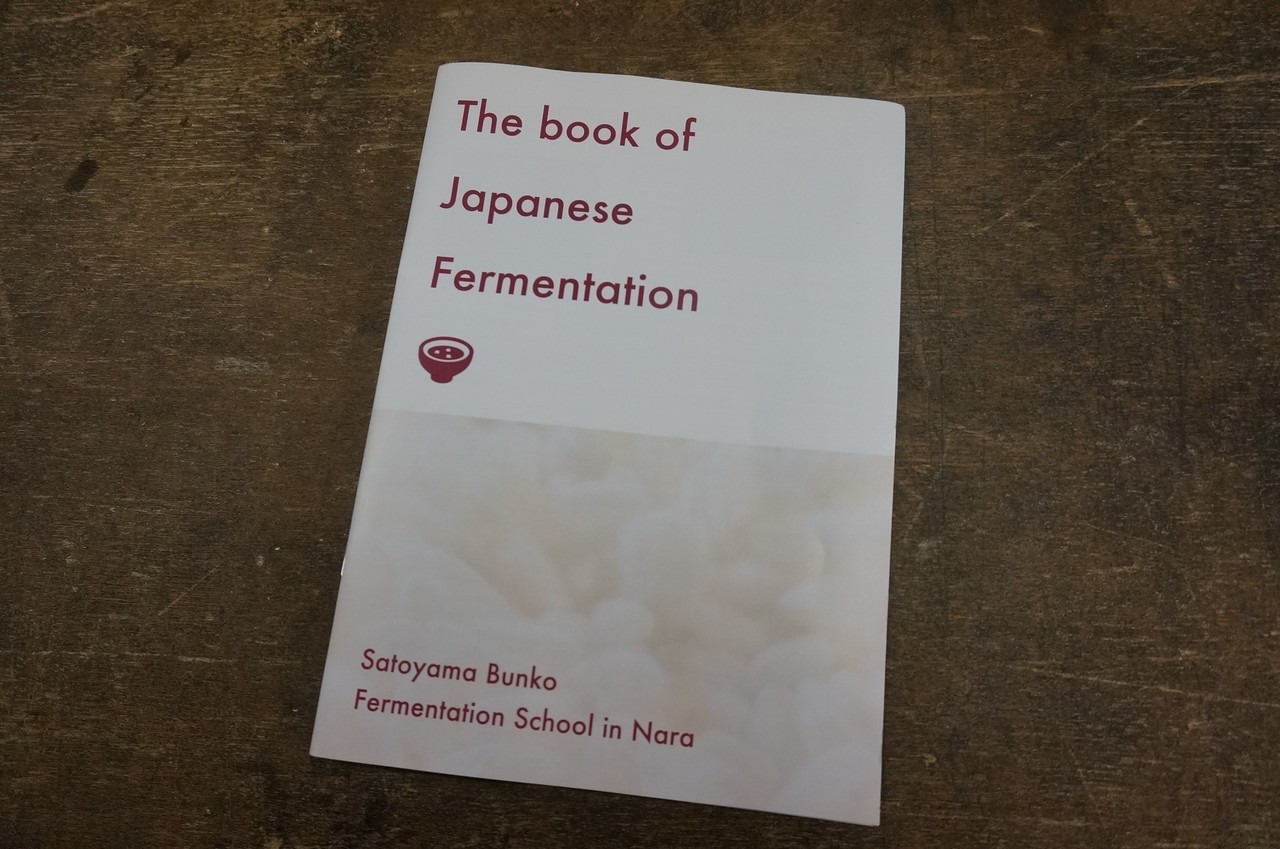
20 pages of English text book about Fermentation in Japan. I think no other place in Japan organize such a lesson, deep-into fermentation.


Program
DAY1
Lunch: Medicinal herb lunch at Daiganji temple
Seminar:Basic knowledge of washoku and fermentation
Lesson 1: Koji & Shio-koji (salted koji malt)
Lesson 2: Soy milk yogurt
Lesson 3: Amazake
DAY 2
Field work: Shoyu & Sake breweries
Lesson 4: Plant hunting & Medicinal herb liquor
Lesson 5: Miso
Lesson 6: Nattou
DAY 3
Lesson 7: Shoyu (soy sauce)
Lesson 8: Tofu
Lunch: Medicinal herb lunch at Daiganji temple
Seminar:Basic knowledge of washoku and fermentation
Lesson 1: Koji & Shio-koji (salted koji malt)
Lesson 2: Soy milk yogurt
Lesson 3: Amazake
DAY 2
Field work: Shoyu & Sake breweries
Lesson 4: Plant hunting & Medicinal herb liquor
Lesson 5: Miso
Lesson 6: Nattou
DAY 3
Lesson 7: Shoyu (soy sauce)
Lesson 8: Tofu
Inquiry
We can organize this kind of events for a group of people, interested in fermentation (minimum member of participants: 10 persons). Please let me know if you have questions.
Sunday, 21 January 2018
misodama, the natural art of fermentation without using koji malt

How did old villagers make miso without using koji malt before? We interviewed 90 years old grand-fathers in the village to investigate traditional knowledge on living with nature.

Making miso without using koji malt
Speaking of miso, generally, steamed beans, rice, and wheat malts are mixed with soy beans. In the mountainous regions, however, rice is difficult to grow, and too precious to make koji malt (mold inoculated with asperguillus oryzae). So, traditionally, village people do not use koji to make miso in these villages.Instead of koji, they make "misodama (miso ball)" to harvest natural fungi in the room. This method can be seen Tohoku, or Shinshu areas, with heavy snow and earth oven in their houses.
Fist of all, boil soy beans. Granmas are cultivating their own beans, which are different varieties for miso, shoyu, and tofu. Some told blue beans are suitable for making miso, and in Tanba regions, black beans are mainly used for miso. Each household has each recipe, and their own bean varieties.
This time, we used 3 varieties of soy beans: black beans, yellow soy, and blue beans. It is said that blended beans could be more tasty.


Boiling water, so called "ame" shoud be preserved with salt until misodama is ready.
Miso pounding by stone mill
The highlight of misodama making is pounding.The traditional stone mill is called "karausu". It has wooden pedal on the other side, and before, children had to step on karausu to grind beans. The other side has a stone ball, and one person should be there to stir bean stuffs.
It sounds like as if the mill is singing a song. villagers used to step on the mill, while singing song.


Making misodama
After boiled soy beans, we made balls of soy beans.
In old recipe books, there are no discriptions on quantity. It is always said "suitable portion" in Japanese we call it "anbai", which is literally means salted plum. The quantity of salt on plum should be different dependent on the temperature, moisture of the plum itself, varieties, and so on.
"In fact, there should be no fixed quantity. These should be learned by doing it by yourself, and create your own taste. " said a ground-father of the village.

After making misodama, next step is binding.


Important thing is to hang misodama above the earth oven. Misodama will be dried by the smoke. Some farmers keep misodama for 4 months during winter, some for 1 year. Then, ame (boild water with salt) will be added to the grinded misodama.
We look forward to the next step: grinding misodama and add ame so that miso will be fermented further.
We look forward to the next step: grinding misodama and add ame so that miso will be fermented further.

Thursday, 18 January 2018
Visit the ingredients (2) "Hishio no sato" a home of soy sauce, Shodo shima island

Home of Soy Sauce "Hishio no Sato"
100 minutes away from Himeji port, 3 hours from Kobe by ferry, Shodoshima island, the second biggest island next to Awaji island, is located in the Setouchi Inland Sea.
The nostalgic island is dotted with olive trees around seaside hills, and 1000 soy sauce barrels. In its peak period, it is said that there were 400 soy sauce makers in the island.
Approximately 2000 to 3000 soy sauce barrels throughhout Japan, of which 1000 are found in Shodoshima. Less than 1 % of Japanese soy sauce are produced in the wooden barrels, and 1/3 of wooden barrels are indeed located in Shodo shima island.
Approximately 2000 to 3000 soy sauce barrels throughhout Japan, of which 1000 are found in Shodoshima. Less than 1 % of Japanese soy sauce are produced in the wooden barrels, and 1/3 of wooden barrels are indeed located in Shodo shima island.
"Hishio (醤)" stands for salted foods, Koku bishio (穀醤) is fermented beans or rice, and said to be an origin of soy sauce. Now, the island try to promote the island's food culture and soy sauce production as "Hishio no Sato".
 |
| scenery from ferry |
 |
| Fukuda port |
Food Ingredients production in the island
The origin of soy sauce production is actually dates back to sea salt production started on the island during the mid-3rd century BC to late 3rd century AD. Since then salt production had been an important industry for the islands. During Edo period (1603-1868), the new industries were developed with abundant availability of salt, such as the production of soy sauce and tsukudani (seafood, meat or seaweed simmered in soy sauce and miring). Somen noodle production also flourished during Edo period. Today, the island is also known as the first successful olive production area in Japan. These abundant food ingredients developed the island’s unique food culture. |
| olive tree plantations can be seen everywhere along the coast |
Yamaroku shoyu
The climate of Shodo shima island is similar to Mediterranean climate, temperate, dried and long hours of sunshine. This is the favorable environment for growing kobo yiest and lactic acid bacteria.The origin of Yamaroku shoyu is also reported to be a salt producer, and soy sauce production was started approximately 150 years ago.
A 100-year old wooden warehouse is designated as an important national heritage, and you can see the bacterias actually living in the ware house. In the 60 wood barrels, earth wall, sealing, there might be millions of bacterias!
 |
| wood barrels are home of living bacterias |


Yamaroku offers a tour to visit the warehouse with free admission fee. There is also a small cafe, "Yamaroku chaya", where you can taste different meals with soy sauce, i.e.) soy sauce ice-cream, mochi with soy sauce, and soy sauce sweets. The café is open from 9:00 to 17:00.
Marukin
Marukin is a leading soy sauce producer on the island. There is a good soy sauce museum on its factory sites. The museum explains the production process, and also exhibits traditional tools and materials. The museum has English displays and a gift shop that sells many different varieties of soy sauce.

koji muro, a room to produce koji malt

Except Summer vacation period (from 20th July to 31th August) and (16th October to 30th November), they close at 16:00. From 4th January to the end of February it is only opened for appointment.
Morikuni Shuzo sake brewery
Morikuni Shuzo, the only one sake brewery in the island, is a young sake brewery, established in 2005. It uses spring water of “Hosigajo”, the highest peak on Shodo-shima island with its ideal rice harvested from the Seto Inland Sea’s coastal regions to brew Japanese sake.

There is also a cafe, and a ground mother "obaa-chan" cooks "makanai", which is literally stands for providing meals for workers, with using affluent sake lees. I really recommend to eat makanai. Miso soup with sake kasu lees, pickles and the island's rice, tsukudani, all are great.

The brewery also owns bakery in the next building, and it uses rice powder and sake.

Access
Take train to Himeji, Kobe, Okayama or Takamatsu, then ferry ride to the island.
Ferry time table can be seen in the link below
Saturday, 23 December 2017
The art of Kudzu, cooking kudzu roots powder in Yoshino mountain
What is kudzu?
kudzu is a common wild plant, everywhere in Japan. The history of using kudzu plants as cooking starch or jelling agent. The starch is processed from kudzu roots, and its fiber is also used for weaving clothes. It is first appeared in manyoshu, a collection of Japanese poetry compiled in the early 7th century. |
| kudzu gashi |
Now, kudzu is also known as a good resource to utilize its starch among vegan and macrobiotic chefs. Sometimes we organize kudzu tour to Yoshino especially by the request of chefs or those who engaged in food products development.
Kudzu kai, the kudzu lesson in Yoshino by Nakai shunpudo.
The lesson starts by learning about biological aspects of the kudzu wild plants.
 |
| private cooking room with the kudzu specialist Mr. Nakai |
When is the suitable season for processing kudzu powder? How to process, and eat? What is the difference between honkudzu and kudzu?
Although most of Japanese people heard about kudzu, these questions could be difficult to answer.

 |
| kudzu roots |
After the lecture, we started cooking lesson, observing how starch absorbing water, gelatinisation process... learning 3 different recipes, kudzu kiri (noodle), kudzu mochi (dumpling) and kudzuyu (drink).
 |
| cooking kudzu kiri |
 |
| gelatinisation process |
Other things to see
Currently there is no place to see the process of making kudzu powder, however, Morino kudzu hompo, one of the oldest commercial kudzu processors in Nara has a museum to exhibit the traditional kudzu producing process, and also preserves 200 species of wild medicinal plants in the garden.
 |
| traditional method to produce kudzu in morino kudzu honpo |
 |
| organic cafe Hanasaka |
 |
| Lunch course |
Subscribe to:
Posts
(
Atom
)


